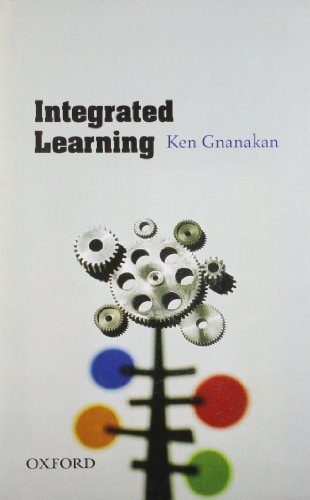
Integrated Learning
0
0
As an Amazon Associate and affiliate partner, Menrva Books earns from qualifying purchases. Learn more
Author Description
This book upholds the idea of learning and education as a means to individual development and social empowerment. It presents a holistic picture, looking at learning as an integral part of one's social and physical life. Strongly differing from existing classroom perspectives, the book analyses integrated learning at its broadest possible imperative-arguing for a spontaneous learning environment within real-life contexts.The book broadly covers: " Creativity in classroom education with a focus on interdisciplinary approach and positive teacher-student interaction " The essence of good education with a deep concern for the impact on the social order " Teachings of Indian and Western educational thinkers-Gandhi, Confucius, Plato, Freire, and Tagore-and their commitment to individual well-being " Application of learning to real-world situationsAccessible and reader-friendly, it will be an indispensible resource to students and teachers of educational studies and to the general reader interested in the true spirit of education.
Menrva's Summary
THE THESIS
This book investigates the necessity of shifting educational paradigms from rigid classroom structures toward a holistic, integrated model of learning that fosters individual development and social empowerment. Ken Gnanakan, an experienced educator, synthesizes historical educational philosophies with contemporary social needs to argue that learning must be a spontaneous, lifelong process embedded within real-life contexts. By critiquing traditional pedagogical constraints, the author proposes a framework where education serves as a catalyst for both personal well-being and the improvement of the broader social order.
THE SCOPE MAP
What You Will Find
- Analysis of interdisciplinary approaches to classroom creativity and teacher-student dynamics.
- Comparative study of educational philosophies from thinkers including Gandhi, Confucius, Plato, Freire, and Tagore.
- Methodologies for applying theoretical learning to practical, real-world situations.
- Examination of the relationship between educational practices and their impact on social structures.
THE AUTHORITY PERSPECTIVE
Educators and students of pedagogy frequently cite this work as a valuable resource for understanding the intersection of classical educational theory and modern social application. The text is noted for its accessible prose, making complex philosophical concepts understandable for both academic professionals and general readers interested in educational reform.
Page Count:
200
Publication Date:
2011-12-21
Publisher:
Oxford University Press
ISBN-10:
0198074360
ISBN-13:
9780198074366
Politics
Education Theory
Social Science
Pedagogy
New Used & Rental Textbooks
Education
Schools & Teaching
Teaching Methods
Community Tags
Similar Books