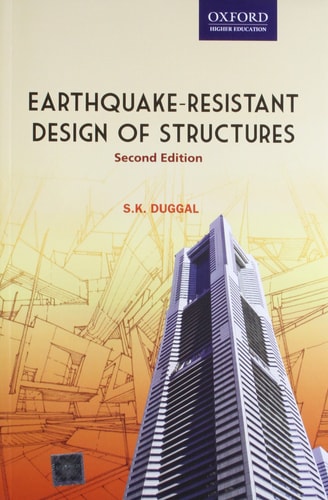
Earthquake Resistant Design of Structures
0
0
As an Amazon Associate and affiliate partner, Menrva Books earns from qualifying purchases. Learn more
Author Description
It aims to explain the different sources of damage that can be triggered by an earthquake and the conceptual method of earthquake-resistant design. The book would also be useful for postgraduate students of civil engineering, practising engineers, and architects.Beginning with an introduction to earthquakes and ground motion, the book provides a detailed coverage of structures and soil in terms of their seismic response. The need for placing emphasis on conceptual design is covered in detail by enumerating factors that cause damage and by offering guidelines for efficient seismic-resistant design, with special attention to timber, masonry, concrete, and steel buildings.
Menrva's Summary
THE THESIS
This book investigates the fundamental principles and methodologies required to design structures capable of withstanding seismic forces. Author Shashikant K. Duggal provides a comprehensive framework for civil engineers and architects, synthesizing geological data regarding ground motion with practical engineering applications. The text emphasizes the necessity of conceptual design to mitigate structural damage, offering a systematic approach to building safety across various material types.
THE SCOPE MAP
What You Will Find
- Analysis of earthquake sources and seismic ground motion characteristics
- Conceptual design guidelines for seismic-resistant structures
- Comparative study of seismic response in timber, masonry, concrete, and steel buildings
- Technical evaluation of soil-structure interaction during seismic events
THE AUTHORITY PERSPECTIVE
Experts and practitioners identify this work as a technical resource for postgraduate civil engineering students and professional architects. Readers frequently note the clarity of the design guidelines and the practical focus on material-specific seismic performance.
Page Count:
528
Publication Date:
2013-09-01
Publisher:
Oxford University Press
ISBN-10:
0198083521
ISBN-13:
9780198083528
Architecture
New Used & Rental Textbooks
Construction
Civil Engineering
Structural Engineering
Engineering
Seismology
Community Tags
Similar Books