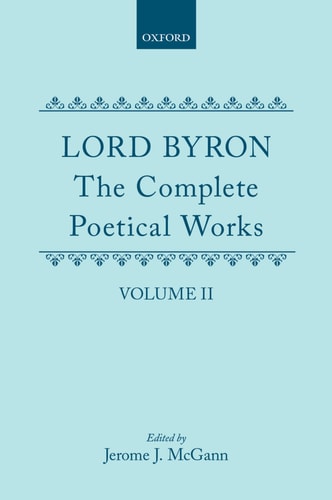
The Complete Poetical Works: Volume II: Childe Harold's Pilgrimage
0
0
As an Amazon Associate and affiliate partner, Menrva Books earns from qualifying purchases. Learn more
Author Description
This is an EXACT reproduction of a book published before 1923. This IS NOT an OCR'd book with strange characters, introduced typographical errors, and jumbled words. This book may have occasional imperfections such as missing or blurred pages, poor pictures, errant marks, etc. that were either part of the original artifact, or were introduced by the scanning process. We believe this work is culturally important, and despite the imperfections, have elected to bring it back into print as part of our continuing commitment to the preservation of printed works worldwide. We appreciate your understanding of the imperfections in the preservation process, and hope you enjoy this valuable book.
Menrva's Summary
THE PULSE
A disillusioned young nobleman embarks on a sprawling continental tour to escape his own ennui and the moral decay of his society. Byron’s protagonist, Childe Harold, serves as the archetype of the Byronic hero, wandering through Europe and the Mediterranean in search of meaning. He is driven by a profound sense of alienation and a desire to witness the remnants of past civilizations. The narrative framework is primarily descriptive and reflective, utilizing the Spenserian stanza to capture the protagonist's internal state against the backdrop of historical landscapes. The poem functions as a meditation on the passage of time, the rise and fall of empires, and the inevitable solitude of the individual.
INSIDE THE PAGES
- Utilization of the Spenserian stanza form
- Exploration of the Byronic hero archetype
- Vivid descriptions of European landscapes and historical ruins
- Philosophical reflections on the nature of liberty and tyranny
- Integration of travelogue elements with lyrical introspection
- Critique of contemporary social and political institutions
- Frequent use of apostrophe to address nature and historical figures
- Emphasis on the sublime and the melancholy of human existence
THE COLLECTIVE ECHO
Readers and critics frequently highlight the work as a foundational text of the Romantic movement, noting its influence on the development of the introspective hero. Discussion often centers on the tension between the poem's travelogue structure and its deeply personal, often cynical, philosophical digressions. Scholars frequently analyze the balance between the vivid, sensory descriptions of the Mediterranean and the protagonist's persistent emotional detachment. The pacing is often described as meditative, prioritizing atmospheric development and thematic exploration over traditional plot progression. Readers interested in the evolution of 19th-century verse often find the technical precision of the stanza form to be a significant point of study.
Page Count:
342
Publication Date:
1981-09-24
Publisher:
Clarendon Press
ISBN-10:
0198127545
ISBN-13:
9780198127543
Poetry
Politics
English
Criticism & Theory
New Used & Rental Textbooks
British & Irish
Romanticism
Classic Literature
Poetry & poets
British literature
Community Tags
Similar Books