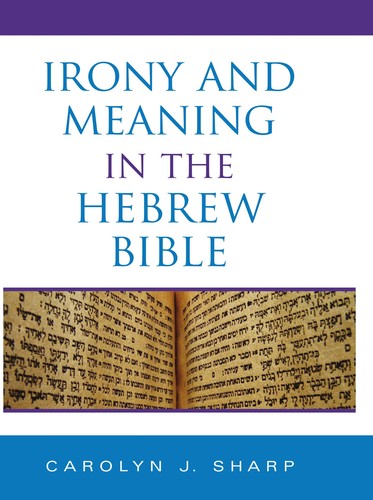
Irony and Meaning in the Hebrew Bible
0
0
As an Amazon Associate and affiliate partner, Menrva Books earns from qualifying purchases. Learn more
Author Description
Was God being ironic in commanding Eve not to eat fruit from the tree of wisdom? Carolyn]. Sharp suggests that many stories in the Hebrew Scriptures may be ironically intended. Deftly interweaving literary theory and exegesis, Sharp illumines the power of the unspoken in a wide variety of texts from the Pentateuch, the Prophets, and the Writings. She argues that reading with irony in mind creates a charged and open rhetorical space in the texts that allows character, narration, and authorial voice to develop in unexpected ways. Main themes explored here include the ironizing of foreign rulers, the prostitute as icon of the ironic gaze, indeterminacy and dramatic irony in prophetic performance, and irony in ancient Israel's wisdom traditions. Sharp devotes special attention to how irony destabilizes dominant ways in which the Bible is read today, especially when it touches on questions of conflict, gender, and the Other.--book jacket.
Menrva's Summary
THE THESIS
The Thesis This book investigates the presence and function of irony within the Hebrew Bible, exploring how an ironic reading can unlock deeper layers of meaning and challenge conventional interpretations. Carolyn J. Sharp, drawing on her expertise in literary theory and biblical exegesis, argues that recognizing irony is crucial for understanding the development of character, narration, and authorial voice across diverse biblical texts. The study examines how irony operates in various contexts, from prophetic performances to wisdom traditions, and how it can destabilize dominant readings, particularly concerning conflict, gender, and the concept of the Other. By focusing on the unspoken and the implied, Sharp reveals the rhetorical power of irony in shaping the biblical narrative.
THE SCOPE MAP
- Analysis of ironic intent in biblical narratives, including the story of Eve and the tree of wisdom.
- Application of literary theory and exegesis to texts from the Pentateuch, the Prophets, and the Writings.
- Exploration of how irony creates an open rhetorical space for character, narration, and authorial voice development.
- Examination of the ironizing of foreign rulers within biblical accounts.
- The role of the prostitute as an icon of the ironic gaze.
- Discussion of indeterminacy and dramatic irony in prophetic performance.
- Analysis of irony within ancient Israel's wisdom traditions.
- How irony destabilizes contemporary readings of the Bible, especially regarding conflict, gender, and the Other.
THE AUTHORITY PERSPECTIVE
The book is recognized for its sophisticated interweaving of literary theory and biblical exegesis to uncover the significance of irony in the Hebrew Bible. Scholars have noted its insightful analysis of how irony functions to destabilize traditional interpretations and open up new avenues for understanding biblical texts. The work is particularly commended for its detailed examination of specific themes such as the ironizing of foreign rulers, the figure of the prostitute, and prophetic performance. Its focus on the unspoken and implied elements within scripture provides a valuable framework for engaging with complex issues of conflict, gender, and the Other.
Page Count:
356
Publication Date:
2008-01-01
ISBN-10:
0253352444
ISBN-13:
9780253352446
Non-Fiction
Theology
Literary Criticism
Community Tags
Similar Books