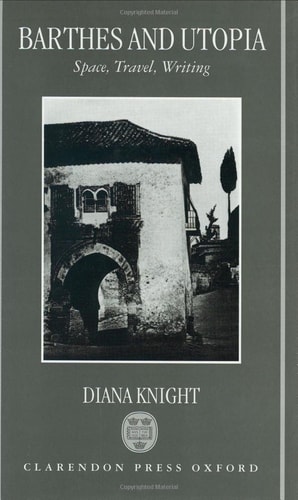
Barthes and Utopia: Space, Travel, Writing
0
0
As an Amazon Associate and affiliate partner, Menrva Books earns from qualifying purchases. Learn more
Author Description
Barthes and Utopia explores the central role of utopias throughout the work of Roland Barthes, from demystification to structuralism, from textuality and sexual hedonism to his final preoccupation with love and mourning. Utopia mediates the supposed phases of Barthes's career, just as it mediates the two sides of his work which are often misleadingly separated: his political and ethical concerns (his desire to invent social values for the world), and his creative project of writing. In short, to take detours via hypothetical utopias was Barthes's way of writing the world. The range of texts studied in Barthes and Utopia is unusually wide, and incorporates discussion of the plans for his so-called Vita Nova - Barthes's final, mysterious writing project. Barthes and Utopia takes us to the heart of Barthes's imaginative processes, of his affective world and idiosyncratic value system. But, because utopia is the meeting point of his lifelong concern with the relationship between history, language, and sexuality, this study also inserts Barthes's work into larger political and theoretical concerns, in particular into ongoing debates around Orientalism and homosexuality.
Menrva's Summary
THE THESIS
This study investigates the recurring concept of utopia as a foundational mechanism within the intellectual development and creative output of Roland Barthes. Diana Knight, a scholar of French literature, examines how Barthes utilized utopian constructs to bridge the perceived divide between his political-ethical commitments and his aesthetic writing projects. By analyzing his progression from structuralist demystification to his final meditations on love and mourning, the author argues that utopia serves as the primary lens through which Barthes interpreted and wrote the world.
THE SCOPE MAP
What You Will Find
- Analysis of Barthes's evolving theoretical frameworks including structuralism and textuality.
- Examination of the unpublished plans for the Vita Nova project.
- Exploration of the intersection between Barthes's work and contemporary debates on Orientalism and homosexuality.
- Investigation into the relationship between history, language, and sexual hedonism in Barthes's writing.
THE AUTHORITY PERSPECTIVE
Scholars recognize this work as a significant contribution to the study of Barthes's later career and his transition toward more personal, affective writing. Readers frequently note the academic density of the prose, which is intended for those already familiar with the broader context of 20th-century French critical theory.
Page Count:
304
Publication Date:
1997-03-27
Publisher:
Clarendon Press
ISBN-10:
0198158890
ISBN-13:
9780198158899
Philosophy
Biography
Literary Criticism
Theory
Utopias
Community Tags
Similar Books