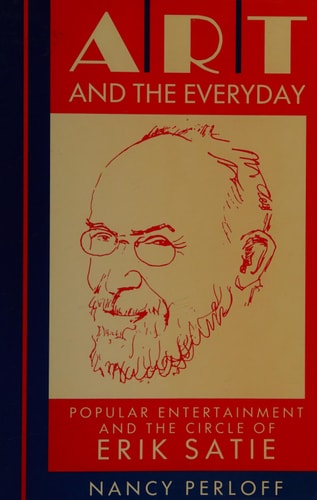
Art and the Everyday: Popular Entertainment and the Circle of Erik Satie
0
0
As an Amazon Associate and affiliate partner, Menrva Books earns from qualifying purchases. Learn more
Author Description
This book examines the early twentieth-century movement that was sparked by the premiere of Erik Satie's ballet Parade in May 1917. Perloff argues that Satie and his colleagues, including Darius Millhaud, Francis Poulenc, Max Jacob, and Jean Cocteau, led French music away from Impressionism by infusing their compositions with French and American popular idioms. They also adopted aesthetic principles of parody, diversity, nostalgia, and repetition from the Parisian cabaret, cafe-concert, circus, fair, and music hall. With their collaborators Pablo Picasso, Fernand Legér, and Francis Picabia, they shared a radical disregard for traditional divisions separating popular and classical forms of creative expression.
Menrva's Summary
THE THESIS
This book investigates how the 1917 premiere of Erik Satie's ballet Parade catalyzed a shift in early twentieth-century French aesthetics by bridging the divide between high art and popular entertainment. Nancy Perloff, a scholar of modernism, utilizes primary source documents and musical analysis to demonstrate how Satie and his circle—including Jean Cocteau and Darius Milhaud—rejected Impressionism. By integrating elements from the circus, cabaret, and music hall, these artists established a new framework that prioritized parody, repetition, and stylistic diversity over traditional classical structures.
THE SCOPE MAP
What You Will Find
- Analysis of the 1917 ballet Parade and its impact on the Parisian avant-garde.
- Examination of the collaborative relationship between musicians, poets, and visual artists like Pablo Picasso and Fernand Legér.
- Exploration of popular idioms such as jazz, ragtime, and cafe-concert music within classical compositions.
- Discussion of aesthetic principles including irony, nostalgia, and the rejection of high-culture elitism.
THE AUTHORITY PERSPECTIVE
Experts recognize this work as a significant contribution to the study of interdisciplinary modernism and the evolution of French music. Readers frequently note the academic rigor of the text, which provides a detailed look at the intersection of performance art and social history during the early twentieth century.
Page Count:
248
Publication Date:
1991-07-25
Publisher:
Oxford University Press
ISBN-10:
0198161948
ISBN-13:
9780198161943
Biography
Modernism
Art History
Music History
Community Tags
Similar Books