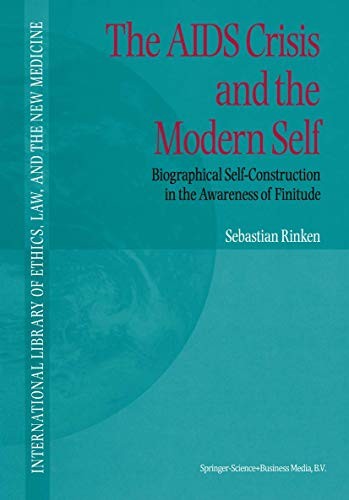
The AIDS Crisis and the Modern Self
0
0
As an Amazon Associate and affiliate partner, Menrva Books earns from qualifying purchases. Learn more
Author Description
In industrialized countries, HIV/AIDS is now increasingly perceived as a chronic condition. Yet initially, before combination therapy became available, this pandemic was widely associated with premature or even imminent death. Receiving the diagnosis typically led to a dramatic biographical disruption. This book turns this basic feature of life with HIV into the vantage point for a fascinating analysis of Western subjectivity. Combining a host of empirical observations with the debate on the modern self, the author agrees that the self-construction of people with HIV highlights the precarious yet indispensable status of the self in contemporary Western society. Constructing one's biography in terms of self-actualization is in fact a manifestation of nihilism: it evokes a standard of certainity which, on closer examination, cannot be sustained. "This book will appeal to scholars and students in the fields of sociology, social psychology, social anthroplogy, social theory and philosophy, as well as anybody interested in the relationship between the self and society or the experience of living with HIV/AIDS."--BOOK JACKET.
Menrva's Summary
THE THESIS
The AIDS crisis, once perceived as a death sentence, is now increasingly viewed as a chronic condition, prompting a re-evaluation of Western subjectivity. This book examines how the experience of living with HIV/AIDS, particularly in industrialized nations, illuminates the construction of the modern self. By analyzing empirical observations alongside debates on self-actualization, the author argues that the self-construction of individuals with HIV reveals the fragile yet essential nature of the self in contemporary Western society. The book posits that constructing one's biography through self-actualization, when faced with such a diagnosis, evokes an unattainable standard of certainty.
THE SCOPE MAP
- Analysis of Western subjectivity through the lens of the HIV/AIDS crisis.
- Examination of the shift in perception of HIV/AIDS from a terminal illness to a chronic condition.
- Exploration of biographical disruption and self-construction in the context of an HIV diagnosis.
- Integration of empirical observations with social theory on the modern self.
- Discussion on the precarious yet indispensable status of the self in contemporary Western society.
- Critique of self-actualization as a biographical framework in the face of existential challenges.
- Target audience includes scholars and students in sociology, social psychology, social anthropology, social theory, and philosophy.
- Relevance for individuals interested in the relationship between the self and society or the experience of living with HIV/AIDS.
THE AUTHORITY PERSPECTIVE
This book is positioned as a significant contribution to scholars and students across multiple disciplines, including sociology, social psychology, social anthropology, social theory, and philosophy. It is also recommended for anyone interested in the intersection of the self, society, and the lived experience of HIV/AIDS. The work aims to provide a nuanced understanding of how a chronic health condition can illuminate fundamental aspects of Western identity and self-construction. The analysis suggests that the pursuit of self-actualization as a narrative framework can expose the inherent uncertainties of modern existence.
Page Count:
242
Publication Date:
2000-01-01
ISBN-10:
079236371X
History
Non-Fiction
Philosophy
Health
Sociology
Social anthropology
Social Theory
Community Tags
Similar Books