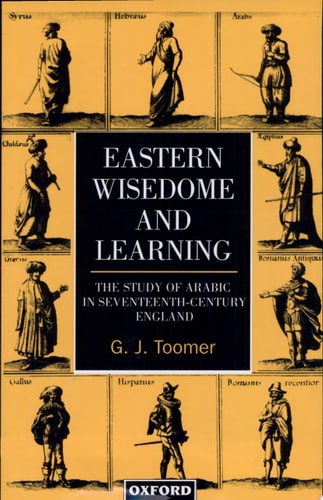
Eastern Wisedome and Learning: The Study of Arabic in Seventeenth-Century England
0
0
As an Amazon Associate and affiliate partner, Menrva Books earns from qualifying purchases. Learn more
Author Description
This book narrates the extraordinary growth in the study of Arabic in England from the late sixteenth century, when it was almost non-existent, to the end of the seventeenth. By its high point around 1666, England was preeminent among European countries in the study of Arabic. Permanent chairs of Arabic had been established at Oxford and Cambridge, and specialized presses in Oxford and London had produced important Arabic works. In this masterly and original study, Professor Toomer gives the first detailed account of this process, set against the religious and political background in England and in Europe. He shows how trade with the Ottoman Empire and mistrust of Islam influenced the study of Arabic. Finally, he traces the course and causes of the drastic decline in Arabic studies towards the end of the century.
Menrva's Summary
THE THESIS
This book investigates the rapid rise and subsequent decline of Arabic language scholarship in seventeenth-century England. Professor G. J. Toomer, a distinguished historian of science and classical studies, utilizes archival records and institutional histories to document how England transitioned from a state of linguistic isolation to a position of European preeminence in Arabic studies. He argues that this academic development was inextricably linked to the shifting religious, political, and commercial interests of the era, particularly regarding trade with the Ottoman Empire.
THE SCOPE MAP
What You Will Find
- A detailed historical timeline of Arabic scholarship from the late sixteenth century through 1666.
- Analysis of the institutionalization of Arabic studies through the establishment of chairs at Oxford and Cambridge.
- Examination of the role of specialized printing presses in London and Oxford in disseminating Arabic texts.
- Contextualization of academic interest in Arabic within the broader framework of European religious tensions and geopolitical mistrust of Islam.
THE AUTHORITY PERSPECTIVE
Scholars and historians of intellectual history recognize this work as a foundational text for understanding the development of Orientalism in England. Readers frequently note the meticulous archival research and the clarity with which Toomer connects academic pursuits to the broader political landscape of the seventeenth century.
Page Count:
396
Publication Date:
1996-05-23
Publisher:
Clarendon Press
ISBN-10:
0198202911
ISBN-13:
9780198202912
History
Intellectual History
European History
Academic
Community Tags
Similar Books