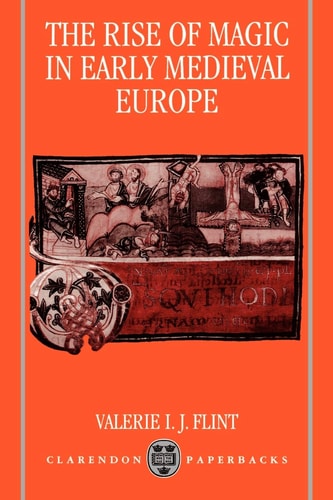
The Rise of Magic in Early Medieval Europe
0
0
As an Amazon Associate and affiliate partner, Menrva Books earns from qualifying purchases. Learn more
Author Description
This is a study of magic in Western Europe in the early Middle Ages. Valerie Flint explores its practice and belief in Christian society, and examines the problems raised by so-called pagan survivals and superstition. She unravels the complex processes at work in the early medieval Christian church to show how the rejection of non-Christian magic came to be tempered by a more accommodating attitude: confrontation was replaced by negotiation, and certain practices previously condemned were not merely accepted, but actively encouraged. The forms of magic which were retained, as well as those the Church set out to obliterate, are analyzed. The superstitions condemned at the Reformation are shown to be, in origin, rational and intelligent concessions intended to reconcile coexisting cultures.
Menrva's Summary
THE THESIS
This work investigates how the early medieval Christian Church navigated the tension between its theological doctrines and the pervasive practice of magic within European society. Valerie I. J. Flint, a scholar of medieval history, utilizes primary source documentation to challenge the traditional view of a binary conflict between Christianity and paganism. She argues that the Church adopted a strategy of negotiation and accommodation, integrating specific magical practices into the Christian framework to facilitate cultural reconciliation.
THE SCOPE MAP
What You Will Find
- Analysis of early medieval Christian attitudes toward pagan survivals and superstition.
- Examination of the transition from confrontational rejection to strategic negotiation of magical rituals.
- Historical evidence detailing which forms of magic were suppressed and which were assimilated.
- Exploration of the rational motivations behind the Church's concessions to coexisting cultural practices.
THE AUTHORITY PERSPECTIVE
Historians and scholars of medieval religion frequently cite this text as a nuanced examination of the complexities inherent in early Christian cultural integration. Readers often note the academic density of the prose, which provides a rigorous, evidence-based challenge to simplistic narratives regarding the eradication of paganism.
Page Count:
466
Publication Date:
2005-01-01
Publisher:
Clarendon Press
ISBN-10:
0198205228
ISBN-13:
9780198205227
Religion
History
Educational Resources
Magic Studies
Magic
Cultural History