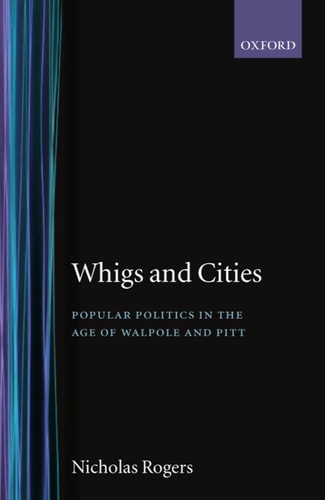
Whigs and Cities: Popular Politics in the Age of Walpole and Pitt
0
0
As an Amazon Associate and affiliate partner, Menrva Books earns from qualifying purchases. Learn more
Author Description
This is the first major study of urban politics in the early Hanoverian era. Rogers challenges the view that the political nation was of minimal significance, and highlights the critical contribution of larger towns to the agitations that beset Walpole and swept Pitt to power. He shows, through a study of Bristol, Norwich, and London, the relative strength of opposition sentiment, the persistence of local antagonisms, and the interplay of economic interest and political clientage. Offering a challenging reinterpretation of the role of the crowd in urban politics, Whigs and Cities sheds new light on the dynamics of urban political culture in the 18th century.
Menrva's Summary
THE THESIS
This work investigates the role of urban political culture in early Hanoverian England, challenging the assumption that popular politics were of minimal significance during the era of Walpole and Pitt. Nicholas Rogers, a historian specializing in 18th-century social and political structures, utilizes archival records and local political data to argue that larger towns were central to the opposition movements that destabilized the Walpole administration. By examining the interplay between economic interests and local political clientage, the author constructs a framework that elevates the importance of urban centers in shaping national political outcomes.
THE SCOPE MAP
What You Will Find
- Comparative analysis of political dynamics in Bristol, Norwich, and London.
- Examination of the influence of the crowd and popular agitation on national policy.
- Investigation into the persistence of local antagonisms and their impact on parliamentary politics.
- Reinterpretation of the relationship between economic interest groups and political clientage.
THE AUTHORITY PERSPECTIVE
Historians and scholars of the 18th century recognize this text as a significant contribution to the study of urban political culture. Readers frequently note the academic rigor and the depth of the archival research presented throughout the analysis.
Page Count:
456
Publication Date:
1990-03-08
Publisher:
Clarendon Press
ISBN-10:
0198217854
ISBN-13:
9780198217855
History
British History
Urban Studies
18th century
Community Tags
Similar Books