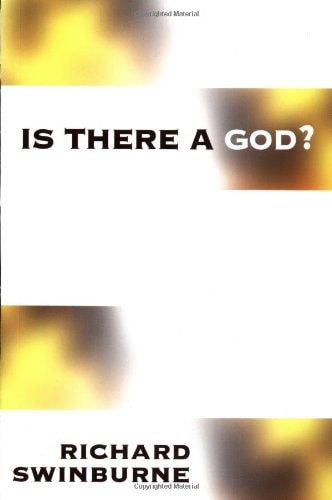
Is There a God?
0
0
As an Amazon Associate and affiliate partner, Menrva Books earns from qualifying purchases. Learn more
Author Description
Is There a God? offers a powerful response to modern doubts about the existence of God. It may seem today that the answers to all fundamental questions lie in the province of science, and that the scientific advances of the twentieth century leave little room for God. Cosmologists have rolled back their theories to the moment of the Big Bang; the discovery of DNA reveals the key to life; the theory of evolution explains the development of life--and with each new discovery or development, it seems that we are closer to a complete understanding of how things are. For many people, this gives strength to the belief that God is not needed to explain the universe; that religious belief is not based on reason; and that the existence of God is, intellectually, a lost cause.Richard Swinburne, one of the most distinguished philosophers of religion today, argues that on the contrary, science provides good grounds for belief in God. Why is there a universe at all? Why is there any life on Earth? How is it that discoverable scientific laws operate in the universe? Swinburne uses these methods of scientific reasoning to argue that the best answers to these questions are given by the existence of God. The picture of the universe that science gives us is completed by God. Powerful, modern, and accessible, Is There a God? is must reading for anyone interested in an intelligent and approachable defence of the existence of God.
Menrva's Summary
THE THESIS
Does the current scientific understanding of the universe render the existence of God unnecessary or obsolete? Richard Swinburne, a prominent philosopher of religion, utilizes the principles of scientific reasoning and probability to argue that the existence of God remains the most coherent explanation for the fundamental nature of the cosmos. By examining the origins of the universe, the complexity of biological life, and the consistency of physical laws, the author posits that scientific discovery actually complements rather than contradicts a theistic worldview.
THE SCOPE MAP
What You Will Find
- Analysis of cosmological arguments regarding the Big Bang and the origin of the universe
- Examination of biological complexity and the implications of DNA and evolutionary theory
- Application of Bayesian probability and inductive reasoning to theological questions
- A structured defense of theism as a rational, evidence-based hypothesis
THE AUTHORITY PERSPECTIVE
Scholars and students of philosophy frequently cite this work as a primary text for understanding contemporary analytical approaches to natural theology. Readers often note that while the text is accessible to a general audience, it maintains a rigorous logical structure that demands careful engagement with the author's probabilistic arguments.
Page Count:
160
Publication Date:
1997-01-19
Publisher:
Oxford University Press
ISBN-10:
0198235453
ISBN-13:
9780198235453
Religion
Philosophy
Apologetics
Science and Religion
Theology
God
Community Tags
Similar Books