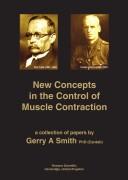
New Concepts in the Control of Muscle Contraction: A Collection of Research Papers
0
0
As an Amazon Associate and affiliate partner, Menrva Books earns from qualifying purchases. Learn more
Author Description
This is a collection of papers that presents a novel interpretation of data from the literature to reason logically for an overlooked mechanism of stimulus-contraction coupling in muscle. This mechanism is then used to explain aspects of the puzzles relating to both an important physiological function of the heart, The Frank–Starling Law, and the basis of a common inherited disease state, familial hypertrophic cardiomyopathy (FHCM). The first three papers were published in the Biochemical Journal and are reproduced here by permission of the Biochemical Society Editors (Portland Press). The remaining five papers are an examination and reinterpretation of data in papers that are already published. Great care has been taken to attribute correctly these data to the publications and their authors. These latter papers have failed to get past the submission offices of a number of serious journals and thus will now have peer review in the public domain. Many published studies in this field have been excluded from subsequent consideration because they do not fit within the established “solely troponin-Ca2+-binding activated, single-headed myosin, multiple cross-bridge highly cooperative model of muscle contraction”. The purpose of the current study is to remove the words “solely” “single-headed” “multiple … highly cooperative” from this sentence to reveal the more simple; “a cross-bridge model of muscle contraction activated both by calcium binding to troponin and by calcium binding to myosin”. This encompasses the established principles of muscle stimulus-contraction coupling but adds the thick-filament activation that has been mooted often in the literature but never attributed a mechanistic basis. The Frank–Starling Law and Familial Hypertrophic Cardiomyopathy; Some new striking aspects of muscle structures Contents Author - ii Preface - iii Introduction - iv Paper I Estimation of Systolic and Diastolic Free Intracellular Ca2+ by Titration of Ca2+ Buffering in the Ferret He
Menrva's Summary
THE THESIS
This collection of research papers proposes a novel interpretation of existing literature to argue for an overlooked mechanism in stimulus-contraction coupling in muscle. The author, Gerry Smith, presents a new model that incorporates thick-filament activation, which has been previously suggested but lacked a mechanistic basis, alongside calcium binding to troponin. This revised model aims to explain phenomena such as the Frank-Starling Law in the heart and the genetic basis of familial hypertrophic cardiomyopathy (FHCM). The work includes previously published papers and re-examinations of published data, with a stated goal of challenging the established 'solely troponin-Ca2+-binding activated, single-headed myosin, multiple cross-bridge highly cooperative model of muscle contraction'.
THE SCOPE MAP
- Reinterpretation of published data to propose a new model of muscle contraction.
- Focus on thick-filament activation as a key component of stimulus-contraction coupling.
- Application of the new model to explain the Frank-Starling Law.
- Application of the new model to explain familial hypertrophic cardiomyopathy (FHCM).
- Inclusion of previously published papers from the Biochemical Journal.
- Examination and reinterpretation of data from other published studies.
- Critique of the established 'solely troponin-Ca2+-binding activated, single-headed myosin, multiple cross-bridge highly cooperative model'.
THE AUTHORITY PERSPECTIVE
The work presents a reinterpretation of established scientific literature, aiming to provide a new mechanistic basis for muscle contraction and explain complex physiological and pathological conditions. The author notes that some of these papers have faced challenges in traditional peer review, suggesting a potentially controversial or unconventional approach to the subject matter. The collection's strength lies in its detailed examination of existing data and its attempt to reconcile disparate findings under a unified theoretical framework. The proposed model seeks to simplify and expand upon current understandings of muscle activation, offering new perspectives for researchers in physiology and biochemistry.
Page Count:
0
Publication Date:
2007-01-01
ISBN-10:
0955532108
ISBN-13:
9780955532108
Action
Science
Art
Non-Fiction
Cardiology
Physiology
Genetics
Biochemistry
Community Tags
Similar Books