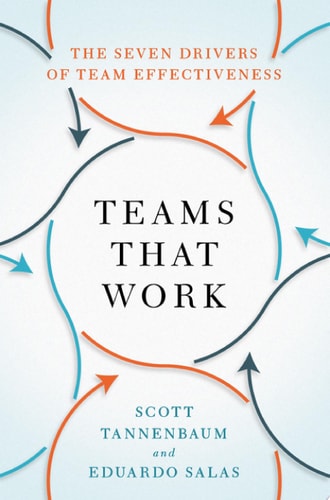
Teams That Work
0
0
As an Amazon Associate and affiliate partner, Menrva Books earns from qualifying purchases. Learn more
Author Description
Why Do Some Teams Thrive, While Others Struggle? In The Modern Workplace, Employees Collaborate. Managers Are Expected To Be Effective Team Leaders And Employees Are Expected To Be Valued Teammates. But Many Teams Struggle. Being Part Of A Struggling Team Can Be Unpleasant, But It Can Also Hurt Your Career And Waste Company Resources. In Teams That Work, Scott Tannenbaum And Eduardo Salas Present The Seven Drivers Of Team Effectiveness And The Clearest Recommendations On What Really Makes Teams Great. Applying The Lessons They've Learned From Working With High-stakes, High-risk Team Situations To Any Kind Of Organization, They Will Dispel Some Of The Most Enduring Myths (e.g., Can You Be Both A Star And A Great Team Player?), Feature The Most Useful Psychological Research, And Share Real-world Illustrations Of Effective Teams In Action. Readers Will Find Actionable, Evidence-based Tips For Being An Effective Team Leader, A Great Team Member, A Supportive Senior Leader, Or An Impactful Consultant.
Menrva's Summary
THE THESIS
What are the fundamental drivers that distinguish high-performing teams from those that struggle in a modern organizational environment? Authors Eduardo Salas and Scott I. Tannenbaum, both experts in industrial-organizational psychology, leverage decades of research and experience in high-stakes environments to identify seven core drivers of team effectiveness. They argue that team success is not accidental but the result of specific, actionable behaviors and structural conditions that can be cultivated by leaders and members alike.
THE SCOPE MAP
What You Will Find
- The seven evidence-based drivers of team effectiveness
- Strategies for balancing individual performance with collective team goals
- Practical frameworks for team leaders, members, and organizational consultants
- Real-world case studies and illustrations of effective team dynamics
Scope Limits
- The text focuses primarily on professional organizational settings rather than athletic or casual social groups
- It does not provide exhaustive psychological profiles for individual personality management
THE AUTHORITY PERSPECTIVE
Experts in organizational development frequently cite this work as a highly accessible synthesis of complex psychological research. Readers often note that the book provides a pragmatic, evidence-based toolkit that is immediately applicable to diverse workplace environments.
Page Count:
240
Publication Date:
2020-01-01
Publisher:
Oxford University Press
ISBN-10:
0190056975
ISBN-13:
9780190056971
Business
Management
Leadership
Professional Development
Teamwork
Community Tags
Similar Books