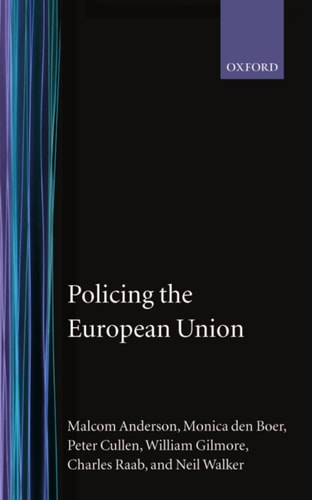
Policing the European Union
0
0
As an Amazon Associate and affiliate partner, Menrva Books earns from qualifying purchases. Learn more
Author Description
International co-operation in criminal law enforcement has become an important policy issue for Europe in the 1990s. This book examines all of the major empirical and theoretical issues associated with the emerging pattern of co-operation, including the harmonization of criminal law and criminal procedures, law enforcement strategies, police organization and discipline, and the politics of immigration and civil liberties.
Menrva's Summary
THE THESIS
This book investigates the complex evolution of international criminal law enforcement and police cooperation within the European Union during the 1990s. The authors, a multidisciplinary team of legal scholars and criminologists, analyze the tension between the necessity for cross-border security and the preservation of national sovereignty. They present a framework that evaluates how harmonized criminal procedures and immigration policies impact civil liberties and institutional organization across member states.
THE SCOPE MAP
What You Will Find
- Analysis of the harmonization of criminal law and procedural standards across EU member states.
- Examination of police organization, discipline, and cross-border operational strategies.
- Discussion of the intersection between immigration policy and internal security measures.
- Assessment of the political implications for civil liberties in an integrated European policing framework.
THE AUTHORITY PERSPECTIVE
Experts recognize this work as a foundational text for understanding the institutional development of European policing structures. Readers frequently note the academic density of the prose, which provides a comprehensive historical snapshot of the policy challenges faced during the late twentieth century.
Page Count:
352
Publication Date:
1996-05-23
Publisher:
Clarendon Press
ISBN-10:
0198259654
ISBN-13:
9780198259657
Police_europe
Sociology
Criminology
European Union
Law
Community Tags
Similar Books