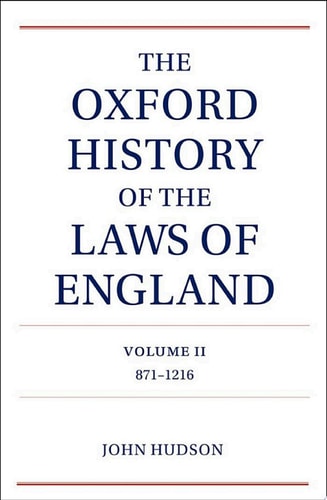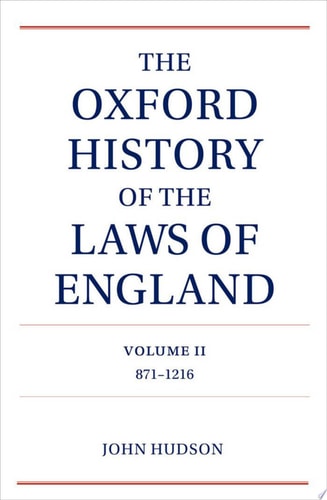
The Oxford History of the Laws of England: Volume II: 871-1216
0
0
As an Amazon Associate and affiliate partner, Menrva Books earns from qualifying purchases. Learn more
Author Description
This volume in the landmark Oxford History of the Laws of England series, spans three centuries that encompassed the tumultuous years of the Norman conquest, and during which the common law as we know it today began to emerge. The first full-length treatment of all aspects of the early development of the English common law in a century, featuring extensive research into the original sources that bring the era to life, and providing an interpretative account, a detailed subject analysis, and fascinating glimpses into medieval disputes.Starting with King Alfred (871-899), this book examines the particular contributions of the Anglo-Saxon period to the development of English law, including the development of a powerful machinery of royal government, significant aspects of a long-lasting court structure, and important elements of law relating to theft and violence. Until the reign of King Stephen (1135-54), these Anglo-Saxon contributions were maintained by the Norman rulers, whilst the Conquest of 1066 led to the development of key aspects of landholding that were to have a continuing effect on the emerging common law. The Angevin period saw the establishment of more routine royal administration of justice, closer links between central government and individuals in the localities, and growing bureaucratization. Finally, the later twelfth and earlier thirteenth century saw influential changes in legal expertise. The book concludes with the rebellion against King John in 1215 and the production of the Magna Carta.Laying out in exhaustive detail the origins of the English common law through the ninth to the early thirteenth centuries, this book will be essential reading for all legal historians and a vital work of reference for academics, students, and practitioners.
Menrva's Summary
THE THESIS
This volume investigates the formative centuries of the English common law, tracing its evolution from the reign of King Alfred to the signing of the Magna Carta. John Hudson, a specialist in medieval legal history, utilizes extensive primary source research to construct an interpretative account of how royal administration, landholding customs, and bureaucratic structures coalesced into a unified legal system. The work argues that the foundations of modern English law were not merely post-Conquest inventions but were deeply rooted in Anglo-Saxon governance and subsequently transformed by Norman and Angevin administrative practices.
THE SCOPE MAP
What You Will Find
- Analysis of legal developments from 871 to 1216, covering the Anglo-Saxon, Norman, and Angevin periods.
- Examination of the transition from decentralized local courts to a centralized royal machinery of justice.
- Detailed investigation into the evolution of landholding laws and the emergence of professional legal expertise.
- Primary source evidence documenting medieval disputes, theft, and violence to illustrate the practical application of early law.
THE AUTHORITY PERSPECTIVE
Legal historians and academics recognize this volume as a foundational reference for understanding the origins of the English common law. Scholars frequently note the rigorous depth of the research and the clarity with which the author navigates the complex transition from Anglo-Saxon custom to the bureaucratic administration of the thirteenth century.
Page Count:
920
Publication Date:
2012-05-16
Publisher:
Oxford University Press
ISBN-10:
019826030X
ISBN-13:
9780198260301
History
Reference
Law Medieval
Legal History
Law
Great Britain
British History