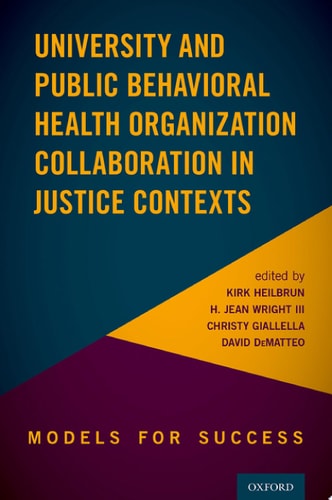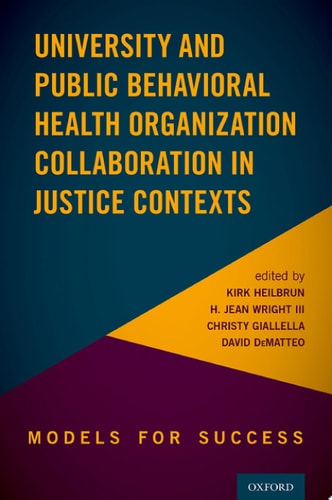
University and Public Behavioral Health Organization Collaboration: Models for Success in Justice Contexts
0
0
As an Amazon Associate and affiliate partner, Menrva Books earns from qualifying purchases. Learn more
Author Description
Public behavioral health organizations serving those involved in the criminal justice system, such as problem-solving courts, correctional facilities, and parole or probation, often lack the necessary resources for long-standing effective treatment, and may struggle to keep up with research standards and retaining funding. To overcome these hurdles, many organizations have turned to university-led collaborations. University and Public Behavioral Health Organization Collaboration in Justice Contexts begins by introducing the relevant purpose and definitions of such partnerships. Each of the nine contributed chapters that follow features a particular collaboration between a university and a public behavioral health organization. Chapters are structured around a description of the collaboration's purposes, beginning, leadership, who is served, services, operations, effectiveness measurement, and financial arrangements. The descriptions provided of each project are then aggregated into a larger model for success which is detailed in the final chapter, along with a distillation of lessons learned in building, operating, and sustaining a successful collaboration. These lessons are grouped into specific categories: planning, working together, training, consultation, financial considerations, personnel, and research. By considering these nine exemplary projects and what they can teach us about such collaborations, this book constitutes an essential guide for those looking to establish comparable partnerships between universities and public behavioral health organizations in a criminal justice context.
Menrva's Summary
THE THESIS
How can university-led partnerships effectively address the resource and research limitations faced by public behavioral health organizations operating within the criminal justice system? This text examines the structural and operational mechanics of collaborative models designed to bridge the gap between academic research and practical service delivery. By analyzing nine distinct case studies, the author provides a framework for establishing, funding, and sustaining partnerships that improve treatment outcomes for justice-involved populations.
THE SCOPE MAP
What You Will Find
- Nine detailed case studies of university-public behavioral health collaborations.
- A standardized structural framework for evaluating partnership effectiveness.
- A synthesis of best practices regarding personnel, training, and financial sustainability.
Scope Limits
- The text focuses exclusively on partnerships within the criminal justice context, such as courts and correctional facilities.
- It does not provide general organizational management theory outside of the specific university-public sector partnership model.
THE AUTHORITY PERSPECTIVE
Experts identify this work as a practical resource for administrators and researchers seeking to formalize cross-institutional partnerships. Readers frequently note the structured, case-based approach as a useful tool for applying academic research to real-world behavioral health challenges.
Page Count:
232
Publication Date:
2020-01-01
Publisher:
Oxford University Press
ISBN-10:
0190052872
ISBN-13:
9780190052874
Forensic Psychology
Criminology
Social Work
behavioral health
General
Public Health
Community Tags
Similar Books