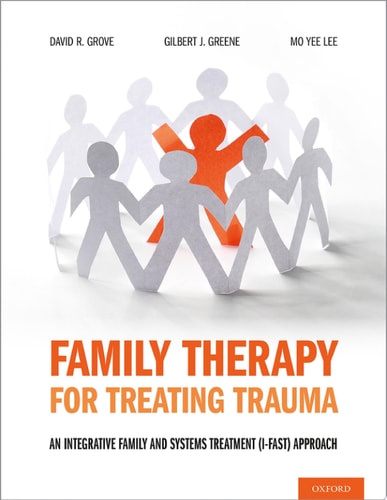
Family Therapy for Treating Trauma: An Integrative Family and Systems Treatment (I-FAST) Approach
0
0
As an Amazon Associate and affiliate partner, Menrva Books earns from qualifying purchases. Learn more
Author Description
Trauma can result in a variety of symptoms and problems such as behavioral disorders, emotional dysregulation, sleep disturbances, recurring nightmares, intrusive thoughts, and learning and academic challenges. Children and adolescents who have posttraumatic stress disorder are usually presented to therapists in one of four clinical situations: (1) the traumatized child and parents request trauma-focused therapy, (2) the child with trauma history refuses treatment, (3) a parent is impaired by their own trauma history but does not want to receive treatment, (4) a child has experienced trauma but the parent wants to focus on a behavioral issue and symptoms rather than the trauma. Family Therapy for Treating Trauma offers a stand-alone family therapy approach for trauma survivors and provides a cross-culturally competent family treatment framework for working with trauma. It outlines both how to assess family patterns that reinforce or exacerbate effects of trauma and how to mobilize the healing power of family relationships to moderate or resolve effects of trauma. Via an integrative approach, the book offers flexible ways to adapt to client choices so as to enhance difficult to engage clients and families. It serves as a resource for professional audiences and can be offered as a text for courses on both family therapy and trauma treatment.
Menrva's Summary
THE THESIS
This book investigates how the Integrative Family and Systems Treatment (I-FAST) model can be applied to address the complex symptoms of trauma within a family unit. The authors, David R. Grove, Gilbert J. Greene, and Mo Yee Lee, utilize their clinical expertise to present a framework that shifts the focus from individual pathology to the systemic dynamics of the family. By integrating various therapeutic techniques, they argue that mobilizing family relationships is a primary mechanism for moderating or resolving the effects of posttraumatic stress in children and adolescents.
THE SCOPE MAP
What You Will Find
- The I-FAST clinical framework for trauma-informed family therapy
- Assessment strategies for identifying family patterns that reinforce trauma symptoms
- Techniques for engaging resistant clients or parents with their own trauma histories
- Cross-culturally competent intervention strategies
Scope Limits
- The text focuses primarily on children and adolescents rather than adult-only trauma populations
- It does not provide a comprehensive review of pharmacological interventions for PTSD
THE AUTHORITY PERSPECTIVE
Clinicians and students frequently cite this text as a practical, highly structured resource for navigating complex family dynamics in trauma treatment. Experts highlight the model's flexibility in adapting to diverse clinical scenarios where traditional individual therapy may be insufficient.
Page Count:
288
Publication Date:
2020-03-19
Publisher:
Oxford University Press
ISBN-10:
0190059400
ISBN-13:
9780190059408
Psychology
Politics
Mental Health
Family Therapy
Couples & Family
New Used & Rental Textbooks
Social Work
Psychology
Counseling
Community Tags
Similar Books