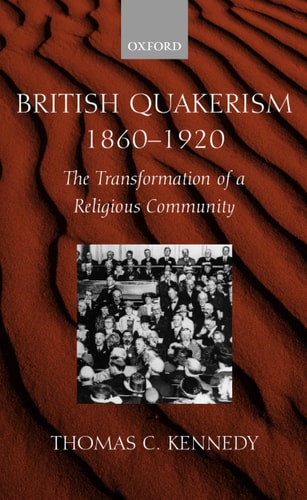
British Quakerism, 1860-1920: The Transformation of a Religious Community
0
0
As an Amazon Associate and affiliate partner, Menrva Books earns from qualifying purchases. Learn more
Author Description
In 1860 the British Society of Friends was a peculiar inward-looking sect, diminishing in numbers and influence. By 1920 British Quakerism, theologically liberal, socially active, and radically pacifist, emerged from a dramatic confrontation with the Warrior State possessed of economic, social, and moral influence out of all proportion to its still minuscule size (20,000). This carefully researched study chronicles the story of Quakerism's transformation during one of the most momentous periods in the history of the London (now British) Yearly Meeting of Friends.
Menrva's Summary
THE THESIS
This study investigates the mechanisms and social pressures that facilitated the radical transformation of the British Society of Friends from an insular, declining sect into a prominent, socially active religious force between 1860 and 1920. Thomas C. Kennedy, a historian specializing in Quaker studies, utilizes extensive archival research from the London Yearly Meeting to trace how the community navigated the tensions of the Victorian and Edwardian eras. He argues that the group's shift toward theological liberalism and active pacifism allowed it to exert significant moral influence despite its small membership numbers.
THE SCOPE MAP
What You Will Find
- A detailed historical analysis of the British Society of Friends from 1860 to 1920.
- Examination of the transition from inward-looking sectarianism to active social engagement.
- Primary source documentation from the London Yearly Meeting archives.
- Analysis of the confrontation between Quaker pacifism and the policies of the British state.
THE AUTHORITY PERSPECTIVE
Scholars and historians of religion frequently cite this work as a definitive account of the modernization of the Quaker movement. Readers often note the academic rigor and the depth of the archival evidence provided throughout the text.
Page Count:
496
Publication Date:
2001-09-06
Publisher:
Oxford University Press
ISBN-10:
0198270356
ISBN-13:
9780198270355
Religion
History
Christianity
Sociology
British History
Community Tags
Other Editions(3)

Similar Books