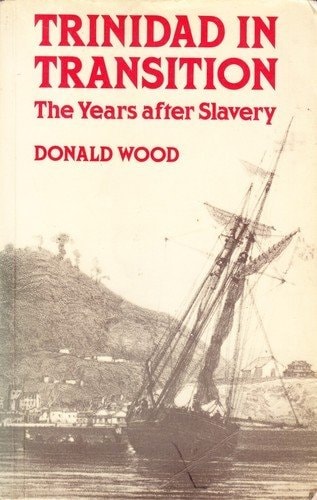
Trinidad in Transition: The Years after Slavery
0
0
As an Amazon Associate and affiliate partner, Menrva Books earns from qualifying purchases. Learn more
Author Description
When slavery ended in Trinidad in 1834 it marked the beginning of a turbulent period in the island's history. Donald Wood looks at the people and the land at the end of slavery and then describes the impact of the immigrants who came to stem the sudden labor shortage and the resulting tensions this produced.
Menrva's Summary
THE THESIS
This work investigates the socio-economic and political transformation of Trinidad following the abolition of slavery in 1834. Donald M. Wood, a historian specializing in Caribbean studies, examines the structural collapse of the plantation system and the subsequent demographic shifts caused by large-scale immigration. The text argues that the transition from a slave-based economy to a free-labor system created deep-seated social tensions that redefined the island's cultural and political landscape for decades.
THE SCOPE MAP
What You Will Find
- Analysis of the immediate post-emancipation economic crisis in Trinidad.
- Detailed examination of the immigration policies implemented to address labor shortages.
- Historical documentation of the interactions between the established population and new immigrant groups.
- Assessment of the long-term social consequences of colonial labor management strategies.
THE AUTHORITY PERSPECTIVE
Historians and scholars of Caribbean history frequently cite this work as a foundational text for understanding the complexities of 19th-century Trinidadian society. Readers often note the academic rigor and the clear, methodical approach the author takes in documenting this turbulent era.
Page Count:
328
Publication Date:
1986-05-15
Publisher:
Oxford University Press
ISBN-10:
0198272693
ISBN-13:
9780198272694
History
Politics & Government
Labor history
Caribbean History
Social History
Community Tags
Similar Books