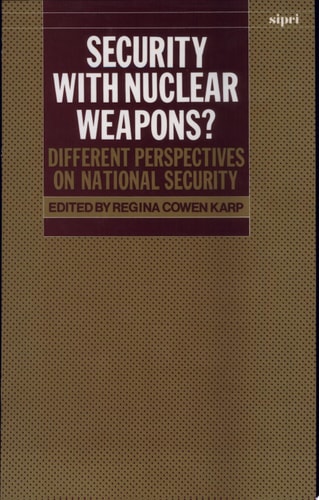
Security with Nuclear Weapons: Different Perspectives on National Security
0
0
As an Amazon Associate and affiliate partner, Menrva Books earns from qualifying purchases. Learn more
Author Description
The possibility of large reductions of nuclear weapons poses fundamental questions about the purpose of nuclear weapons. Why have some countries chosen to acquire nuclear weapons? How--and why--have these decisions been maintained over time? Why have some countries elected tp approach, but not cross, the nuclear threshold? This book examines the similarities and differences in political approaches to nuclear weapons both within and among three groups of countries: nuclear, non-nuclear, and threshold. Providing insight into the impact nuclear weapons have on national and international security, this analysis offers a comprehensive reassessment of the concept of nuclear security.
Menrva's Summary
THE THESIS
This book investigates the fundamental purpose of nuclear weapons and the diverse political motivations that drive states to acquire, maintain, or abstain from nuclear capabilities. Regina Cowen Karp, a recognized expert in international security and arms control, synthesizes historical data and political theory to evaluate how nuclear status influences national security strategies. The analysis provides a structured framework for understanding the decision-making processes of nuclear-armed, non-nuclear, and threshold states within the global security architecture.
THE SCOPE MAP
What You Will Find
- Comparative analysis of nuclear, non-nuclear, and threshold state policies
- Examination of the political motivations behind nuclear proliferation and restraint
- Assessment of the impact of nuclear arsenals on international security stability
- Reassessment of traditional concepts regarding nuclear deterrence and national security
THE AUTHORITY PERSPECTIVE
Experts and scholars in the field of international relations frequently cite this monograph as a foundational text for understanding the geopolitical complexities of nuclear proliferation. Readers often note the academic rigor and the clarity with which the author navigates the competing security interests of different state categories.
Page Count:
414
Publication Date:
1991-05-09
Publisher:
Stockholm International Peace Research Institute
ISBN-10:
019827839X
ISBN-13:
9780198278399
International relations
National security
Military Strategy
Nuclear weapons
Community Tags
Similar Books