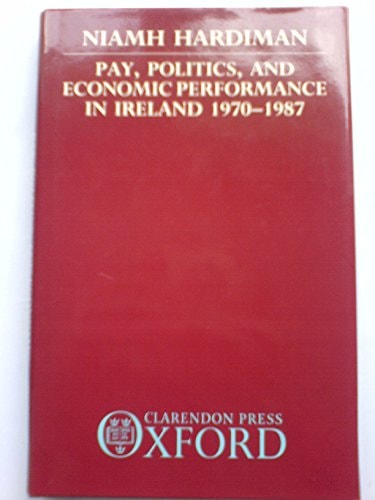
Pay, Politics, and Economic Performance in Ireland 1970-1987
0
0
As an Amazon Associate and affiliate partner, Menrva Books earns from qualifying purchases. Learn more
Author Description
This book illuminates the central aspects of Ireland's experience with collective bargaining during the 1970s and 1980s. Hardiman explores the reasons for the agreements, their function, and their consequences for all concerned, providing an important contribution to the general literature on the political economy of wage regulation.
Menrva's Summary
THE THESIS
This book investigates the political and economic drivers behind Ireland's adoption of collective bargaining agreements between 1970 and 1987. Niamh Hardiman, a scholar of political economy, utilizes historical data and policy analysis to examine how wage regulation functioned within the Irish state. She argues that these agreements were not merely economic tools but were deeply embedded in the political negotiations between the government, labor unions, and employer organizations. The text provides a framework for understanding the structural constraints that shaped Irish economic performance during this period of volatility.
THE SCOPE MAP
What You Will Find
- Analysis of national wage agreements and collective bargaining structures in Ireland from 1970 to 1987.
- Examination of the political negotiations between government, labor unions, and employer associations.
- Evaluation of the consequences of wage regulation on national economic performance.
- Theoretical framework regarding the political economy of corporatism and industrial relations.
THE AUTHORITY PERSPECTIVE
Experts recognize this work as a foundational text for understanding the specific political economy of Ireland during the late twentieth century. Readers frequently note the academic density of the prose and the rigorous historical detail provided by the author.
Page Count:
296
Publication Date:
1989-02-09
Publisher:
Oxford University Press
ISBN-10:
0198275331
ISBN-13:
9780198275336
History
Economics
Labor Relations
Collective bargaining
Ireland
Community Tags
Similar Books