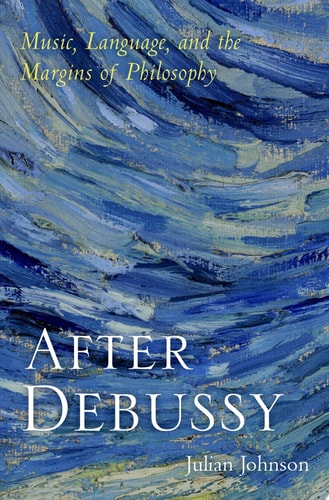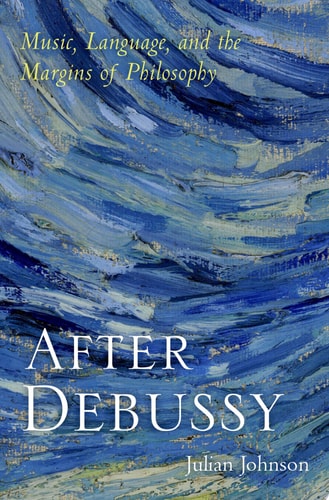
After Debussy: Music, Language, and the Margins of Philosophy
0
0
As an Amazon Associate and affiliate partner, Menrva Books earns from qualifying purchases. Learn more
Author Description
Classical Music Shows A Close Relationship To Language, And Both Musicology And Philosophy Have Tended To Approach Music From That Angle, Exploring It In Terms Of Expression, Representation, And Discourse. This Book Turns That Idea On Its Head. Focusing On The Music Of Debussy And Its Legacy In The Century Since His Death, After Debussy Offers A Groundbreaking New Perspective On Twentieth-century Music That Foregrounds A Sensory Logic Of Sound Over Quasi-linguistic Ideas Of Structure Or Meaning. Author Julian Johnson Argues That Debussy's Music Exemplifies This Idea, Influencing The Music Of Successive Composers Who Took Up The Mantle Of Emphasizing Sound Over Syntax, Sense Over Signification. In Doing So, This Music Not Only Anticipates A Central Problem Of Contemporary Thought-the Gap Between Language And Our Embodied Relation To The World-but Also Offers A Solution. With A Readable Narrative Structure Grounded In An Impressive Body Of Literature, After Debussy Ranges Widely Across French Music, Demonstrating The Impact Of Debussy's Music On Composers From Faure And Ravel To Dutilleux, Boulez, Grisey, Murail And Saariaho. It Ranges Similarly Through A Set Of French Writers And Philosophers, From Mallarme And Proust To Merleau-ponty, Jankelevitch, Derrida, Lyotard And Nancy, And Even Draws From The Visual Arts To Help Embody Key Ideas. In Accessibly Tackling Substantial Ideas Of Both Musicology And Philosophy, This Book Not Only Presents Bold New Ways Of Understanding Each Discipline But Also Lays The Groundwork For Exciting New Discourse Between Them.
Menrva's Summary
THE THESIS
This book investigates the relationship between music and language by challenging the traditional view that music functions primarily through expression, representation, or discourse. Julian Johnson, a professor of music, utilizes a framework that prioritizes the sensory logic of sound over linguistic syntax. By examining the legacy of Claude Debussy, the author argues that music occupies a unique space that addresses the gap between language and our embodied experience of the world.
THE SCOPE MAP
What You Will Find
- Analysis of French musical lineage from Debussy to composers like Ravel, Dutilleux, Boulez, and Saariaho.
- Philosophical engagement with thinkers including Mallarme, Proust, Merleau-Ponty, Derrida, and Lyotard.
- A methodology that integrates musicology, philosophy, and visual arts to define a sensory logic of sound.
Scope Limits
- The text focuses primarily on the French tradition of music and philosophy rather than a global history of 20th-century music.
- It does not provide a comprehensive biography of Debussy, but rather uses his work as a conceptual anchor for broader aesthetic arguments.
THE AUTHORITY PERSPECTIVE
Scholars and musicologists recognize this work as a sophisticated bridge between music theory and continental philosophy. Readers frequently note the academic density of the prose, which requires a foundational understanding of both musical analysis and philosophical discourse.
Page Count:
393
Publication Date:
2020-01-01
Publisher:
Oxford University Press
ISBN-10:
0190066849
ISBN-13:
9780190066840
Philosophy
French Philosophy
Music History
New Used & Rental Textbooks
Music and language
Criticism history
Musicology
history music
Social Aspects
Music
Performance theory
Aesthetics
Community Tags
Similar Books