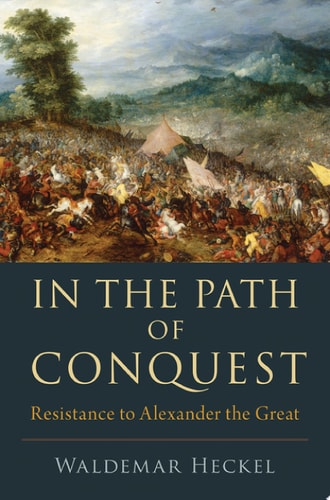
In the Path of Conquest: Resistance to Alexander the Great
0
0
As an Amazon Associate and affiliate partner, Menrva Books earns from qualifying purchases. Learn more
Author Description
This book offers a fresh insight into the conquests of Alexander the Great by attempting to view the events of 336-323 BCE from the vantage point of the defeated. The extent and form of the resistance of the populations he confronted varied according to their previous relationships with either the Macedonian invaders or their own Achaemenid rulers. The internal political situations of many states--particularly the Greek cities of Asia Minor--were also a factor. In the vast Persian Empire that stretched from the Aegean to the Indus, some states surrendered voluntarily and others offered fierce resistance. Not all regions were subdued through military actions. Indeed, as the author argues, the excessive use of force on Alexander's part was often ineffective and counterproductive.In the Path of Conquest examines the reasons for these varied responses, giving more emphasis to the defeated and less to the conqueror and his Macedonian army. In the process, it debunks many long-held views concerning Alexander's motives, including the idea that his aim was to march to the eastern limits of the world. It also provides a fresh reevaluation of Darius III's successes and failures as a commander. Such a study involves rigorous analysis of the ancient sources, and their testimony is presented throughout the book in the form of newly translated passages. A unique portrait of a well-known age, In the Path of Conquest will significantly alter our understanding of Alexander's career.
Menrva's Summary
THE THESIS
This work investigates the nature and motivations of the resistance faced by Alexander the Great during his campaigns from 336 to 323 BCE. Waldemar Heckel, a recognized scholar in the field of ancient history, utilizes a critical re-examination of primary source materials to shift the focus from the Macedonian conqueror to the diverse populations of the Persian Empire. The author argues that Alexander's reliance on excessive military force was frequently counterproductive and that the responses of conquered states were deeply influenced by internal political dynamics and existing power structures.
THE SCOPE MAP
What You Will Find
- Analysis of the political and social landscape of the Achaemenid Empire.
- Re-evaluation of Darius III's military and administrative performance.
- Examination of the varied responses of Greek cities in Asia Minor to Macedonian expansion.
- Newly translated passages from ancient historical sources.
Scope Limits
- The text does not provide a comprehensive biography of Alexander the Great.
- It does not focus on the tactical details of Macedonian military maneuvers.
THE AUTHORITY PERSPECTIVE
Experts and historians frequently note the academic rigor and the value of the author's focus on the perspectives of the defeated. The text is considered a significant contribution to the study of the Macedonian era, providing a necessary counter-narrative to traditional accounts of Alexander's career.
Page Count:
368
Publication Date:
2020-02-26
Publisher:
Oxford University Press
ISBN-10:
0190076682
ISBN-13:
9780190076689
History
Biography
New Used & Rental Textbooks
Europe
Historical
Generals
Military History
Ancient History
Greece
Military
Community Tags
Similar Books