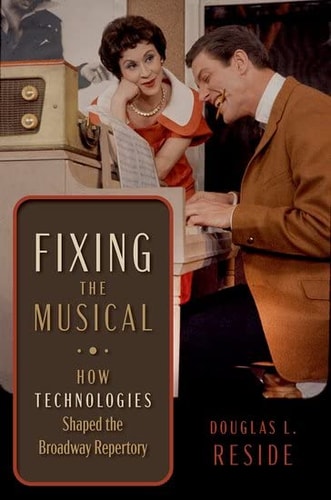
Fixing the Musical: How Technologies Shaped the Broadway Repertory
0
0
As an Amazon Associate and affiliate partner, Menrva Books earns from qualifying purchases. Learn more
Author Description
Thousands of shows have opened on Broadway. Why do we remember some and not others?The musical theatre repertory is not composed of titles popular in the theatre but by those with successful cast recordings, movie versions, or even illegal bootlegs on YouTube. The shows audiences know, and the texts and music they expect to hear when they attend a production, are defined by media consumed at home more than by memories of performances witnessed in the theatre. For example, author Doug Reside shows that it is no accident that the serious book musical with a fixed score developed in the 1940s - when commercially pressed and marketed record albums made it possible to record most of the score of a new musical in a fixed medium. And Hamilton, a musical with dense lyrics and revolutionary musical style, would not have been as easily accessible to world audiences if most hadn't already had the opportunity to learn the score by listening to free digital streams of the original cast recording.The technologies that made these media possible developed concurrently with and shaped the American musical as an art form. Reside uncovers how the affordances and limitations of these technologies established a repertory of titles that are most frequently performed and defined by the texts used in these performances. Fixing the Musical argues that the musicals we most remember are those which most effectively used their era's best recording and distribution technologies to document and share the work with those who would never see the original production on Broadway.
Menrva's Summary
THE THESIS
This book investigates how the evolution of recording and distribution technologies has fundamentally dictated which Broadway musicals become part of the enduring cultural repertory. Douglas L. Reside, a curator of the New York Public Library for the Performing Arts, utilizes historical analysis of media formats—from early phonograph records to digital streaming—to argue that the "fixed" nature of these technologies shaped the composition and popularity of the American musical. He posits that the accessibility of a show's score outside the theater is the primary driver of its long-term recognition and performance history.
THE SCOPE MAP
What You Will Find
- Analysis of the correlation between the rise of the book musical and the development of long-playing record albums in the 1940s.
- Examination of how digital streaming and social media platforms influence contemporary musical theater consumption.
- Case studies on specific productions, including Hamilton, to illustrate the impact of media accessibility on audience familiarity.
Scope Limits
- The text does not provide a comprehensive history of every Broadway production, focusing instead on those that exemplify technological influence.
- It does not focus on the artistic or creative processes of individual composers independent of their distribution methods.
THE AUTHORITY PERSPECTIVE
Experts in theater history and media studies recognize this work as a significant contribution to understanding the intersection of technology and performance. Readers frequently note the clarity of the author's argument regarding how media formats have standardized the musical theater canon.
Page Count:
232
Publication Date:
2023-01-01
Publisher:
Oxford University Press
ISBN-10:
0190073721
ISBN-13:
9780190073725
Theater Studies
Technology and Culture
Theater
Media Studies
Performance theory
Music History
Music
Community Tags
Similar Books