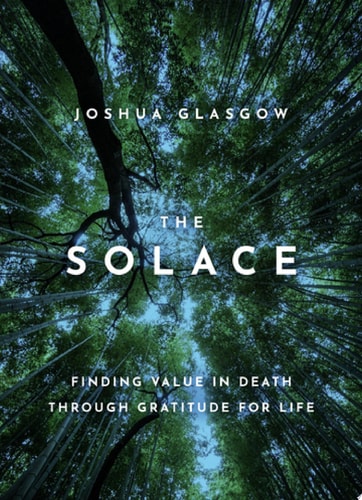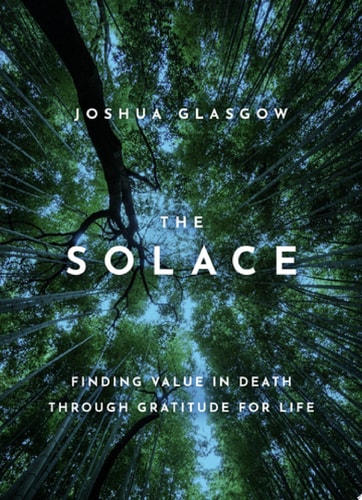
The Solace: Finding Value in Death through Gratitude for Life
0
0
As an Amazon Associate and affiliate partner, Menrva Books earns from qualifying purchases. Learn more
Author Description
How can we find solace when we face the death of loved ones? How can we find solace in our own death? When philosopher Joshua Glasgow's mother was diagnosed with cancer, he struggled to answer these questions for her and for himself. Though death and immortality introduce some of the most basic and existentially compelling questions in philosophy, Glasgow found that the dominant theories came up short.Recalling the last months of his mother's life, Glasgow reveals the breakthrough he finally arrived at for himself, from which readers can learn and find solace. When we are grateful for life, we value all of it, and this includes death, its natural culmination. Just as we are grateful for the value in our lives, we can affirm this value in death. This is how to face death in a way that is both rational and comforting--in a way that provides solace.Too often we think about death as nothing but a loss. But if we shift our thinking, we can focus on how the goodness of life radiates to all its parts, even to death itself. In this way, we can find solace in death without having to resort to sentimentalism, and we can do so in a way that is equally relevant for the religious and non-religious. This path to solace provides a reassuring and significant tool for those grappling with the fact that we pass away.
Menrva's Summary
THE THESIS
How can individuals reconcile the inevitability of death with the inherent value of a lived life? Philosopher Joshua Glasgow examines the limitations of traditional philosophical theories regarding mortality, drawing upon his personal experience with his mother's terminal illness. He proposes a framework centered on gratitude, arguing that by valuing the entirety of life, one can rationally and comfortingly accept death as its natural culmination.
THE SCOPE MAP
What You Will Find
- A philosophical inquiry into the nature of mortality and human value.
- A conceptual framework for reframing death as a component of life's goodness.
- Personal narrative elements used to ground abstract philosophical concepts.
Scope Limits
- The text does not provide clinical psychological advice for acute grief.
- It does not offer theological arguments or religious dogma regarding the afterlife.
THE AUTHORITY PERSPECTIVE
Experts note that this work serves as a bridge between academic philosophy and personal existential inquiry. Readers frequently highlight the accessibility of the prose, which manages to address complex metaphysical questions without relying on overly technical jargon.
Page Count:
128
Publication Date:
2020-11-01
Publisher:
Oxford University Press
ISBN-10:
0190074302
ISBN-13:
9780190074302
Non-Fiction
Politics
Philosophy
Grief
Movements
Ethics & Morality
Social Philosophy
Existentialism
Metaphysics
ethics philosophy
Death & dying
New Used & Rental Textbooks
Community Tags
Similar Books