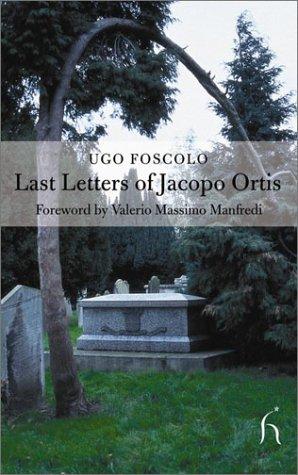
The Last Letters of Jacopo Ortis
0
0
As an Amazon Associate and affiliate partner, Menrva Books earns from qualifying purchases. Learn more
Author Description
The Last Letters of Jacopo Ortis is a novel by Ugo Foscolo, first published in its complete form in 1802. It is considered a foundational work of Italian Romanticism. The novel is written in an epistolary format, consisting of letters from the young patriot Jacopo Ortis to his friend Lorenzo Alderani. Ortis is deeply in love with Teresa, the daughter of a friend, but she is betrothed to another man. Simultaneously, Ortis is disillusioned by the political situation in Italy, particularly Napoleon's cession of Venetian territory to Austria. The novel chronicles Ortis's emotional and political despair, his reflections on love, death, and patriotism, and his eventual tragic end.
Menrva's Summary
THE PULSE
A young Italian patriot grapples with unrequited love and political despair in the wake of Napoleon's betrayal. Jacopo Ortis, a fervent idealist, finds himself torn between his passionate love for Teresa and his disillusionment with the political landscape of Italy. After Napoleon cedes Venetian territory to Austria, Ortis feels his homeland's fate sealed and his own spirit crushed. He retreats to the Euganean Hills, seeking solace in nature and the company of his friend Lorenzo, but his internal turmoil and the external political realities offer no escape, leading him to contemplate the ultimate act of defiance.
INSIDE THE PAGES
- Epistolary format, composed of letters written by Jacopo Ortis to his friend Lorenzo Alderani.
- Exploration of themes such as patriotism, love, political disillusionment, and the sublime.
- Set against the historical backdrop of post-Napoleonic Italy, specifically the cession of Venice to Austria.
- Features lyrical descriptions of the Italian landscape, particularly the Euganean Hills.
- The narrative follows Ortis's descent into despair and his philosophical reflections on life and death.
- The protagonist's unrequited love for Teresa, who is betrothed to another man, serves as a central emotional conflict.
- The novel reflects the Sturm und Drang literary movement with its emphasis on intense emotion and individualism.
- Presents a critique of political opportunism and the perceived betrayal of national ideals.
THE COLLECTIVE ECHO
The Last Letters of Jacopo Ortis is widely recognized as a seminal work of Italian Romanticism, often cited as a precursor to Goethe's The Sorrows of Young Werther in its exploration of passionate, doomed love and political despair. Critics have noted its powerful emotional intensity and its lyrical prose, which captures both the beauty of the Italian landscape and the turmoil of its protagonist's soul. The novel's themes of patriotism and disillusionment resonated deeply with Italian readers during a period of nationalistic fervor. Its enduring legacy lies in its profound influence on subsequent Italian literature and its poignant portrayal of an individual crushed by both personal tragedy and historical circumstance.
Page Count:
176
Publication Date:
2003-01-01
ISBN-10:
1843910020
ISBN-13:
9781843910022
Fiction
Classics
Literary Fiction
Epistolary Novel
Community Tags
Similar Books