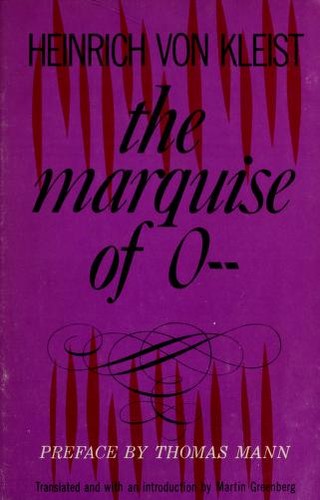
The Marquise of O--
0
0
As an Amazon Associate and affiliate partner, Menrva Books earns from qualifying purchases. Learn more
Author Description
From 'The Marquis of O--', in which a woman is made pregnant without her knowledge, to the vivid and inexplicable suffering portrayed in 'The Earthquake in Chile', his stories are those of a man swimming against the tide of the German Enlightenment, unable to believe in the idealistic humanism of his day, and who sees human nature as irrational, ambiguous and baffling. It is this loss of faith, together with his vulnerability and disequilibrium, his pronounced sense of evil, his desperate challenge to established values and beliefs, that carries Kleist more forcefully than Goethe or Schiller across the gap between the eighteenth century and today.
Menrva's Summary
THE PULSE
A noblewoman finds herself inexplicably pregnant, a situation that threatens to unravel her reputation and her sanity. The Marquise, a woman of high standing, awakens from a faint to discover she is pregnant, with no memory of how it occurred. She must navigate the societal scandal and her own bewilderment as she seeks to understand the impossible event, all while facing the judgment of her family and the community.
INSIDE THE PAGES
- Exploration of a woman's psychological state following an inexplicable event.
- Themes of societal judgment and reputation in the late 18th century.
- A narrative centered on mystery and the breakdown of rational understanding.
- The story unfolds with a sense of unease and psychological suspense.
- Focus on the internal experience of the protagonist amidst external pressures.
- The narrative questions the nature of agency and memory.
THE COLLECTIVE ECHO
Heinrich von Kleist's stories, including 'The Marquise of O--', are often seen as a departure from the prevailing humanism of the German Enlightenment. Critics note his portrayal of human nature as fundamentally irrational and ambiguous, a perspective that resonates with contemporary readers. His exploration of vulnerability, disequilibrium, and a pronounced sense of evil positions his work as a bridge between the 18th century and modern sensibilities. The stories challenge established values and beliefs, offering a stark contrast to the more idealistic views of his contemporaries like Goethe and Schiller.
Page Count:
319
Publication Date:
1985-01-01
ISBN-10:
0140443592
Fiction
Literary Fiction
Classics
Short Stories
Gothic
Community Tags
Similar Books