Tramontane: Wrecks of Time
0
0
As an Amazon Associate and affiliate partner, Menrva Books earns from qualifying purchases. Learn more
Author Description
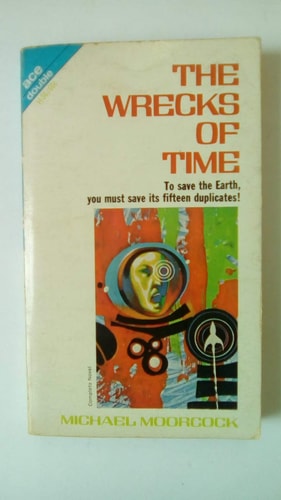
TRAMONTANE is the fourth science-fantasy novel based on the Finnish legendary epic Kalevala, seemed like a good idea because there are actually four important heroes in these wonderful legends, and this novel completes the cycle, concerning itself with the prophecy of the Great Return when the Vanhat seed shall return to Otava, the planet of their origin. Kullervo is the "bad one" of the legends. Like Manfred and Oedipus, he was predestined for tragedy and doom. However, he is surely one of the most fascinating characters in all mythology. Jean Sibelius, the great Finnish composer, chose his tragic life for the theme of his magnificent symphonic tone poem Kullervo, one of his finest works, involving choruses, soloists, and a sweeping Wagnerian nobility.-Emil Petaja. THE WRECKS OF TIME. "EARTH ZERO TO EARTH FIFTEEN - WHICH WAS THE REAL ONE? What the inhabitants of Greater America didn't realize was that theirs was the only inhabited landmass, apart from one island in the Philippines. They still talked about foreign countries, though they would forget little by little, but the countries were only in their imagination, mysterious and romantic places where nobody actually went. That was the way it was on E-3, one of the fifteen alternate Earths that had been discovered through the subspace experiments. Professor Faustaff knew that these alternate Earths were somehow recent creations, and that they were under attack from the strange eroding raids of the mysterious bands known as the D-Squads. But there were tens of millions of people on those Earths who were entitled to life and protection - and unless Faustaff and his men could crack the mystery of these worlds' creation and the more urgent problem of their destruction, it would mean not only the end of these parallel planets, but just possibly the blanking out of all civilization in the universe."
Menrva's Summary
THE PULSE
These two novellas explore the intersection of ancient mythological prophecy and the precarious nature of parallel realities. In Tramontane, the narrative follows the tragic arc of Kullervo, a figure predestined for doom, as he seeks the return of the Vanhat seed to their ancestral home of Otava. In The Wrecks of Time, Professor Faustaff confronts the systematic erosion of fifteen alternate Earths by mysterious forces, requiring him to solve the mechanics of their creation before all existence is erased. Both stories utilize third-person perspectives to navigate complex, high-stakes environments where the boundaries of time and space are fluid.
INSIDE THE PAGES
- Integration of Finnish Kalevala mythology into a science-fantasy framework
- Exploration of predestination and tragic character archetypes
- Concept of subspace experiments as a catalyst for multiversal travel
- Examination of societal decay and the loss of historical memory
- High-stakes conflict involving the potential erasure of multiple civilizations
- Use of planetary origins and cosmic prophecy as narrative drivers
- Focus on the scientific investigation of artificial or created realities
- Stylistic blending of operatic, mythic tone with mid-century science fiction tropes
THE COLLECTIVE ECHO
Readers often note the ambitious scope of these works, particularly how they attempt to synthesize disparate genres like mythic epic and hard-edged science fiction. Discussion frequently centers on the contrast between Petaja’s focus on Finnish folklore and the more traditional multiversal mechanics found in the accompanying narrative. Critics highlight the pacing as rapid, reflecting the urgency of the protagonists' missions to save their respective worlds from total annihilation. The thematic focus on the fragility of civilization and the weight of prophecy remains a consistent point of interest for those examining the evolution of mid-century speculative fiction. Readers generally appreciate the imaginative breadth displayed in these stories, even when the narrative density challenges the reader's ability to track the shifting realities.
Page Count:
254
Publication Date:
1967-01-01
Publisher:
Ace H36
ISBN-10:
0020080360
ISBN-13:
9780020080367
Science Fiction
Fantasy
Space Opera
Science Fiction
Kalevala
Adventure
Mythological Fiction
Community Tags
Similar Books