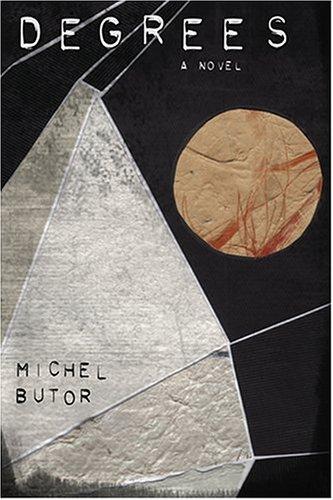
Degrees
0
0
As an Amazon Associate and affiliate partner, Menrva Books earns from qualifying purchases. Learn more
Author Description
On Tuesday, October 12, 1954, Pierre Vernier, a teacher in a Paris lycee, begins writing what he wants to be the complete record of his life, his students, and his fellow teachers. He begins by meticulously documenting the facts he already knows about his students - their names, ages, the relationships among them, and the books they're studying. Then he enlists his nephew - a student in his class - to report on the private lives of the other boys. He then studies the school manuals for every subject and class these students are taking - for to record all reality, he must know all that has passed, is passing, and will pass through his students' minds." "But Vernier finds that the core of what he actually knows is useless unless he can spin around it a concentric web of larger suppositions, endowed with varying "degrees" of truth. Relying on his nephew's information, he writes Part Two of his manuscript as if it were being written by his nephew. Finally, in Part Three, the raw material of life overwhelms his delicate literary structure, thus exposing the impossibility of his obsession and the damaging effect this obsession has on both himself and those who surround him."--Jacket.
Menrva's Summary
THE PULSE
A Paris teacher attempts to meticulously document the lives of his students, only to find his obsession consuming him and those around him. Pierre Vernier, a teacher at a Parisian lycee, begins a project to record the complete history of his life, his students, and his colleagues. He starts by detailing his students' facts, relationships, and studies, then enlists his nephew to gather information on their private lives. As he delves deeper, Vernier realizes that objective facts are insufficient without a framework of
INSIDE THE PAGES
- The narrative begins with Pierre Vernier's decision to document his life and the lives of his students and colleagues.
- Vernier meticulously records factual data about his students, including names, ages, relationships, and academic subjects.
- He enlists his nephew to gather private information about the other students.
- The narrative explores Vernier's attempt to construct a 'concentric web of larger suppositions' around the factual material.
- Part Two of the manuscript is written as if by the nephew, blurring the lines of authorship and perspective.
- The book examines the concept of 'degrees' of truth and the subjective nature of reality.
- In Part Three, Vernier's literary structure collapses under the weight of the raw material of life.
- The novel ultimately exposes the destructive impact of Vernier's obsession on himself and others.
THE COLLECTIVE ECHO
The novel is recognized for its intricate structure and philosophical exploration of truth and obsession. Critics have noted the ambitious literary architecture employed by Richard Howard, particularly the multi-layered narrative that shifts perspectives and blurs the lines between fact and supposition. The book's examination of the subjective nature of reality and the destructive potential of intellectual obsession has been a focal point of discussion. Its complex thematic elements and formal experimentation position it as a significant work of literary fiction.
Page Count:
351
Publication Date:
2005-01-01
ISBN-10:
1564783405
ISBN-13:
9781564783400
Contemporary
Literary Fiction
Fiction
Community Tags
Similar Books