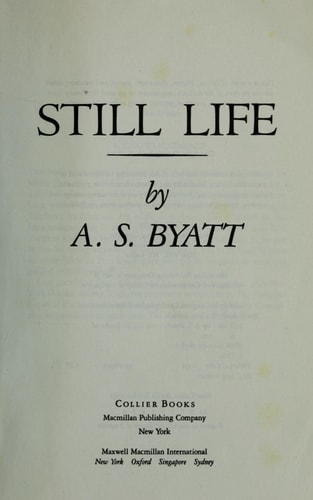
Still Life
0
0
As an Amazon Associate and affiliate partner, Menrva Books earns from qualifying purchases. Learn more
Author Description
In the 1950s, Stephanie Potter, now married to a clergyman, is conflicted about her domestic life and her strivings for intellectual fulfillment; her brilliant sister Frederica eagerly embarks on her academic (and sexual) education at Cambridge University; and their troubled brother Marcus painfully tries to find friendship and love.
Menrva's Summary
THE PULSE
The narrative follows the divergent paths of the Potter siblings as they navigate the social and intellectual constraints of post-war Britain. Stephanie, Frederica, and Marcus each grapple with the tension between personal ambition and the rigid expectations of 1950s society. Stephanie attempts to reconcile her domestic responsibilities with her intellectual identity, while Frederica seeks autonomy through academic pursuit at Cambridge. Marcus struggles to establish meaningful connections in a world that often feels alien to his sensibilities, with the narrative shifting between their perspectives to examine the fragmentation of their family unit.
INSIDE THE PAGES
- Multi-perspective narrative structure
- Detailed exploration of 1950s British social mores
- Integration of art history and literary theory
- Focus on the transition from post-war austerity to cultural change
- Examination of gender roles in academia and marriage
- Philosophical inquiries into the nature of perception
- Character-driven plot development
- Dense, descriptive prose style
THE COLLECTIVE ECHO
Readers and critics frequently note the intellectual density of the prose, which often incorporates complex discussions on art and literature. Discussion often centers on the stark contrast between the domestic confinement experienced by Stephanie and the burgeoning independence of Frederica. Many observers highlight the author's ability to capture the specific atmosphere of the 1950s through meticulous detail and character introspection. The balance of the narrative leans heavily toward internal development rather than external action, requiring a patient reader to fully appreciate the thematic depth. The work is widely regarded as a significant examination of the shifting roles of women and the challenges of intellectual life in the mid-twentieth century.
Page Count:
384
Publication Date:
1991-01-01
Publisher:
Macmillan Publishing Company, Incorporated
ISBN-10:
0020178557
ISBN-13:
9780020178552
Fiction
Art
Literary Fiction
Family Saga
Contemporary
Coming of Age
British literature
Historical