Metalwork in Early America
0
0
As an Amazon Associate and affiliate partner, Menrva Books earns from qualifying purchases. Learn more
Author Description
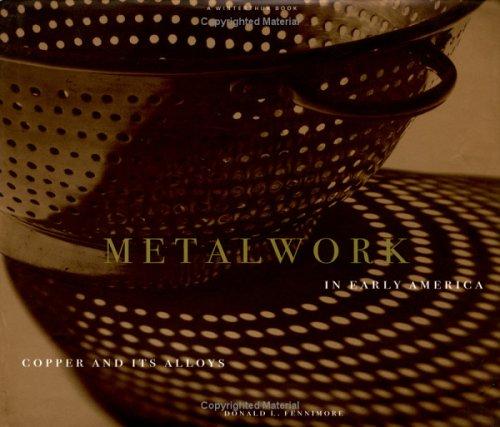
Copper and its alloys - brass, bronze, and paktong - were an integral part of Americans' lives from the time of earliest settlement. Throughout the first two hundred years of colonial and early federal America, these metals were fashioned into literally hundreds of different types of objects. This volume explores the importance of these metals for early Americans, using the extensive collections at Winterthur. The first three chapters cover mining and manufacturing techniques, the extensive marketing network through which raw materials and finished goods moved from manufacturer to consumer, and the factors that governed the marking of metals by their makers. These essays, followed by color plates, provide a background and introduce the entries, which picture and discuss more than three hundred individual objects. Each entry presents specific information that can include metallurgical content as well as the object's function, fabrication, history, maker - if known - and the social context surrounding its use.
Menrva's Summary
THE THESIS
This volume investigates the pervasive role of copper and its alloys in the daily lives of early Americans. Donald L. Fennimore, drawing on the extensive collections at Winterthur, explores the significance of brass, bronze, and paktong from the earliest settlements through the first two centuries of American history. The book details the mining and manufacturing processes, the complex marketing networks for raw materials and finished goods, and the practices surrounding the marking of metals by their makers. These foundational essays precede detailed discussions of over three hundred individual objects, providing context for their metallurgical content, function, fabrication, history, and social significance.
THE SCOPE MAP
- What You Will Find:
- Mining and manufacturing techniques for copper and its alloys.
- The marketing network for raw materials and finished goods.
- Factors governing the marking of metals by makers.
- Detailed discussion and imagery of over three hundred individual objects.
- Specific information on metallurgical content, function, fabrication, and history for each object.
- Insights into the social context surrounding the use of these metal objects.
THE AUTHORITY PERSPECTIVE
This book is regarded as a comprehensive scholarly treatment of early American metalwork, particularly focusing on copper and its alloys. The detailed catalog of objects, supported by essays on production and distribution, makes it a valuable resource for historians and collectors alike. Its reliance on the Winterthur collections ensures a high standard of artifact analysis and historical context. The work provides a thorough examination of the material culture and industrial history of the period.
Page Count:
472
Publication Date:
1996-01-01
ISBN-10:
0912724374
Non-Fiction
History
American History
Metallurgy
Decorative Arts
Industrial history
Community Tags
Similar Books