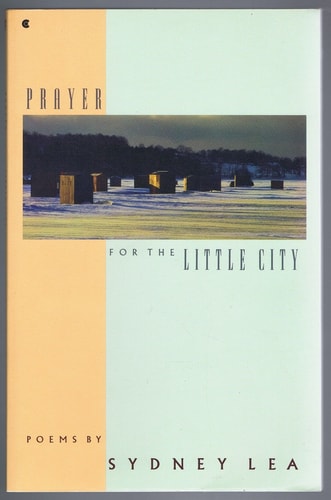
Prayer for the Little City: Poems
0
0
As an Amazon Associate and affiliate partner, Menrva Books earns from qualifying purchases. Learn more
Author Description
In his fourth collection of poems, Sydney Lea remains true to the narrative values for which his verse has been widely recognized. Here, however, Lea becomes more contemplative—even more overtly religious——-than before. There are some striking poems set in Italy, but Lea’s territory for the most part is a region increasingly under siege- the small towns and shrinking wild country of upper New England: the flinty bailiwick, famous for “self-reliance” yet possessed of a distinctive culture and a communitarian urge, both of which Lea depicts tenderly but without sentimentality. Few contemporary writers in any genre know their region as intimately as Sydney Lea, and in keeping with a poetic paradox reaching back at least as far as Wordsworth, it is such apparently parochial knowledge that lends 'Prayer for the Little City' its widest resonances.
Menrva's Summary
THE PULSE
The collection centers on the tension between the preservation of rural New England identity and the encroaching pressures of modern societal change. Sydney Lea navigates the landscape of upper New England, documenting the decline of small-town culture and the shrinking wild spaces that define the region. The speaker acts as an observer of this flinty bailiwick, balancing a deep, intimate knowledge of the local environment with a broader, contemplative inquiry into religious and communal values. The poems function as a series of meditations, utilizing a narrative framework that moves between specific regional observations and universal existential questions.
INSIDE THE PAGES
- Focus on the intersection of religious contemplation and secular rural life
- Detailed depictions of the New England landscape and its inhabitants
- Narrative-driven verse that emphasizes storytelling within poetic structures
- Exploration of the paradox between parochial knowledge and universal resonance
- Inclusion of poems set in Italy to provide contrast to the primary regional focus
- Examination of the tension between individual self-reliance and communitarian needs
- Avoidance of sentimentality in the portrayal of rural decline
- Use of precise, grounded imagery to anchor abstract thematic concerns
THE COLLECTIVE ECHO
Discussion often centers on Lea's ability to maintain a rigorous narrative focus while shifting toward more overtly religious and philosophical themes. Readers frequently highlight the poet's intimate familiarity with his subject matter, noting that his specific focus on New England geography serves as a gateway to broader human concerns. Critics often point to the balance between his observational precision and the emotional weight of his reflections on a changing culture. The collection is recognized for its refusal to romanticize its subjects, opting instead for a clear-eyed assessment of the region's current state.
Page Count:
69
Publication Date:
1991-01-01
Publisher:
Collier Books
ISBN-10:
0020223455
ISBN-13:
9780020223450
Poetry
American poetry
Contemporary Poetry
Poetry
Nature Poetry
Community Tags
Similar Books