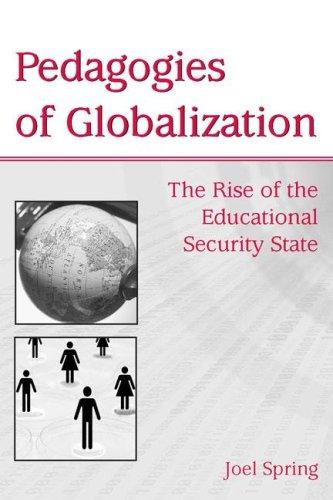
Pedagogies of Globalization
0
0
As an Amazon Associate and affiliate partner, Menrva Books earns from qualifying purchases. Learn more
Author Description
In this book, Joel Spring examines globalization and its worldwide effects on education. A central thesis is that industrial consumerism is the dominant paradigm in the integration of education and economic planning in modern economic security states. Readership for this book includes scholars and students in comparative, international, and multicultural education; educational policy and politics; historical, social, and philosophical foundations of education; and curriculum studies.--Jacket.
Menrva's Summary
THE THESIS
This book investigates the pervasive influence of globalization on educational systems worldwide. Joel H. Spring, a noted scholar in the field, argues that industrial consumerism has become the primary framework for integrating education with economic planning within modern economic security states. The work draws upon extensive research to present a critical analysis of how global economic forces shape educational policies and practices. It is intended for an academic audience engaged with comparative, international, and multicultural education, as well as those focused on educational policy, politics, and the historical, social, and philosophical underpinnings of education.
THE SCOPE MAP
- Analysis of globalization's impact on education systems globally.
- Central thesis on industrial consumerism as a dominant paradigm.
- Examination of the integration of education and economic planning.
- Focus on modern economic security states.
- Discussion of educational policy and politics.
- Exploration of historical, social, and philosophical foundations of education.
- Consideration of curriculum studies in the context of globalization.
THE AUTHORITY PERSPECTIVE
The book is positioned as a scholarly examination of globalization's effects on education, likely appealing to academics and students in specialized fields. Its central thesis regarding industrial consumerism and its role in economic security states suggests a critical perspective on contemporary educational trends. The detailed readership indicated points to a text that engages with complex theoretical frameworks and policy implications. The work is expected to contribute to ongoing discussions within comparative and international education circles.
Page Count:
308
Publication Date:
2006-01-01
ISBN-10:
0805855564
Politics
History
Non-Fiction
Education
Globalization
Sociology Of Education
Educational Policy
Community Tags
Similar Books