Ecosystems
0
0
As an Amazon Associate and affiliate partner, Menrva Books earns from qualifying purchases. Learn more
Author Description
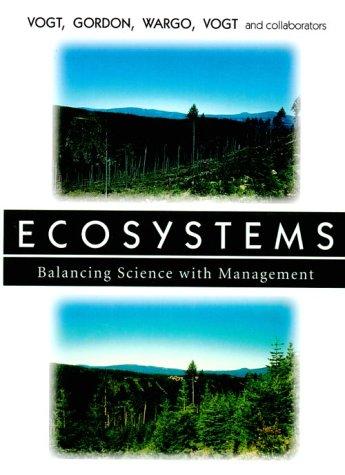
Ecosystem management has gained widespread visibility as an approach to the management of land to achieve sustainable natural resource use. Despite widespread interest in this emerging management paradigm, Ecosystems is the first book to directly propose approaches for implementing ecosystem management, give examples of viable tools, and discuss the potential implications of implementing an ecosystem approach. These ideas are framed in a historical context which examines the disjunction among ecological theory, environmental legislation, and natural resource management. The book includes several case studies that examine the role of ecosystem management in well-known examples such as the Adirondacks and the old-growth forests of the Pacific Northwest. The authors emphasize that human values play a large role in making natural resource management decisions and suggest that ecosystem management be used as a tool which highlights the ecological consequences of these decisions. The book explores the relationship between biodiversity and ecosystem functional attributes, with the goal of understanding potential conflicts between managing for biodiversity and managing ecosystems. It concludes with innovative approaches that can be developed and incorporated into any framework for ecosystem management. Ecosystems: Balancing Science with Management will be of interest to natural resource managers responsible for developing management systems to sustain terrestrial ecosystems, to graduate students studying ecosystems, and to scientists interested in developing better tools for understanding the factors controlling ecosystem structure and function as well as assessing the risk of damage to ecological systems from perturbation.
Menrva's Summary
THE THESIS
This book proposes practical approaches for implementing ecosystem management, bridging the gap between ecological theory and natural resource application. It examines the historical disconnect between ecological science, environmental law, and resource management, presenting ecosystem management as a paradigm for sustainable use. The authors highlight the influence of human values on decision-making and advocate for ecosystem management as a tool to illuminate ecological consequences. The work also investigates the interplay between biodiversity and ecosystem functions, exploring potential conflicts and offering innovative solutions for management frameworks.
THE SCOPE MAP
- What You Will Find:
- Approaches for implementing ecosystem management.
- Examples of viable tools for ecosystem management.
- Historical context of ecological theory, environmental legislation, and natural resource management.
- Case studies from regions like the Adirondacks and Pacific Northwest old-growth forests.
- Discussion on the role of human values in natural resource decisions.
- Exploration of the relationship between biodiversity and ecosystem functional attributes.
- Innovative approaches for ecosystem management frameworks.
THE AUTHORITY PERSPECTIVE
The book is positioned as a foundational text for natural resource managers and graduate students, offering practical guidance on implementing ecosystem management. Its strength lies in bridging theoretical ecological concepts with applied management strategies, supported by historical context and real-world case studies. The authors' emphasis on integrating human values into decision-making and understanding the biodiversity-function relationship provides a nuanced perspective. It aims to equip professionals with tools to balance scientific understanding with the practicalities of sustaining terrestrial ecosystems.
Page Count:
470
Publication Date:
1997-01-01
ISBN-10:
0387948139
ISBN-13:
9780387948133
Nature
Non-Fiction
History
Science
Biodiversity
Ecology
Case studies
Community Tags
Similar Books