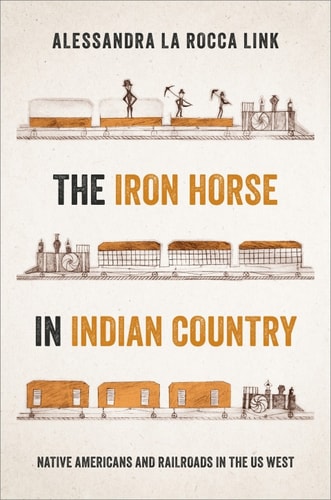
The Iron Horse in Indian Country
0
0
As an Amazon Associate and affiliate partner, Menrva Books earns from qualifying purchases. Learn more
Author Description
In 1872, artist John Gast rendered one of the more famous depictions of nineteenth-century Western settlement, a painting titled American Progress. Gast's painting celebrated the US colonization of the West as the culmination of industrial progress by foregrounding two relatively new technologies: the telegraph and the railroad. For Gast, as for so many other Americans, the Iron Horse seemed destined to serve as the literal engine by which the industrial acumen and God-given civilization of the expanding nation would conquer western lands and peoples. On Gast's canvas, American Indians shuffled toward the painting's edge. Faced with the locomotive's irrepressible force, Gast assumed that native peoples, incapable of adapting to modernity, would have no choice but to fade away.The Iron Horse in Indian Country shows how indigenous Americans across the trans-Mississippi West actively engaged with western railroads, not simply as passive bystanders to and victims of railroad expansion and dispossession as they have traditionally been cast. Foregrounding the hidden histories of native entanglements with the Iron Horse between the 1850s and 1930s, Alessandra La Rocca Link reveals how they played central roles as guides, passengers, entrepreneurs, wage-earners, and tribal citizens. Many Indians became wage earners (and, in some cases, wage payers) at a historic moment when the federal government sought to sequester natives on isolated reservations and limit their labors to agriculture. Indigenous political envoys made authorized and unauthorized visits to Washington, DC for negotiations among native leaders, railroad corporations, and the federal government, the beginnings of tribal and intertribal activism that would accelerate in the early twentieth century. The railroad provided Indigenous communities with a tool that they often put in the service of sustaining their cultural and material lives in the face of colonization. Indeed, the end of formal treaty relations with
Page Count:
0
Publication Date:
2025-04-03
Publisher:
Oxford University Press Academic US
ISBN-10:
0197674429
ISBN-13:
9780197674420