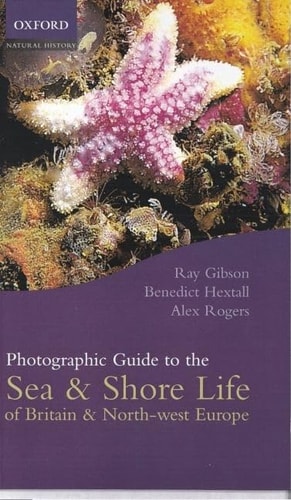
Photographic Guide to Sea and Shore Life of Britain and North-west Europe
0
0
As an Amazon Associate and affiliate partner, Menrva Books earns from qualifying purchases. Learn more
Author Description
This photographic guide to sea shore animals and plants represents a completely new approach to field guides. It is aimed at those who wish to find and identify organisms encountered on the sea shore or immediately offshore quickly and easily while promoting their conservation. Uniquely, each species is illustrated by a photograph and, in most cases, accompanied by a line drawing that emphasizes the critical features for identification and a map to show the distribution of the species in North-West Europe. The text itself deliberately focuses on features that complement the photographs and facilitate identification non-destructively--where, for example, burrowing worms can be identified by digging them up and therefore killing them, only the cast, the part usually seen, is shown. Stress is laid on the importance of exploiting all available information for locating and identifying each species--if two species have identical appearance they are described separately and behavioral, geographical, or seasonal features that distinguish them are described in the text. There is no other guide to seashore organisms like this one; those available are either less comprehensive or less well illustrated. It will appeal to beachcombers of all levels, from families to students and professionals, as well to divers and those visiting the proliferating numbers of commercially run marine aquaria that are open to the public.
Menrva's Summary
THE THESIS
This guide addresses the challenge of accurately identifying marine organisms in the intertidal and near-shore zones of Britain and North-West Europe through a non-destructive, visually-oriented methodology. The authors, Alex Rogers, Ben Hextall, and Ray Gibson, leverage their expertise in marine biology to create a practical identification framework. By combining high-quality photography with diagnostic line drawings and distribution maps, the text provides a comprehensive resource for both amateur beachcombers and professional biologists. The work emphasizes identification techniques that prioritize the conservation of the organisms being studied.
THE SCOPE MAP
What You Will Find
- Comprehensive photographic coverage of sea shore animals and plants found in North-West Europe.
- Diagnostic line drawings highlighting critical identification features for each species.
- Distribution maps detailing the geographical range of identified organisms.
- Non-destructive identification protocols that focus on observable traits like burrows or casts rather than specimen collection.
THE AUTHORITY PERSPECTIVE
Experts and field researchers frequently highlight this guide as a foundational resource due to its unique focus on non-destructive identification methods. Readers often note the clarity of the visual aids and the practical utility of the text for both educational and professional marine study.
Page Count:
456
Publication Date:
2001-08-09
Publisher:
Oxford University Press
ISBN-10:
0198500416
ISBN-13:
9780198500414
Nature
Science
Reference
Field Guide
Marine Biology
Community Tags
Similar Books