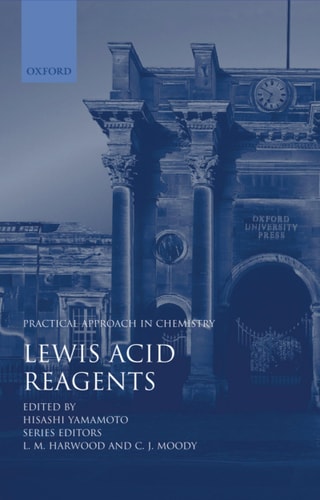
Lewis Acid Reagents: A Practical Approach
0
0
As an Amazon Associate and affiliate partner, Menrva Books earns from qualifying purchases. Learn more
Author Description
A clear and comprehensive laboratory manual providing step-by-step protocols for using Lewis acid reagents to catalyze organic synthesis processes. After an examination of the synthetic utility of bulky aluminum reagents as Lewis acid receptors, the manual covers the following reagents, protocols, and processes: Boron; Magnesium (II) and other alkali and alkaline earth metals; Zinc (II); Chiral titanium complexes for enantioselective catalysis; Tin Lewis acid; Silicon (IV); Silver and gold; Zr- and Hf-centered Lewis acid in organic synthesis; Scandium (III) and yttrium (III); Lanthanides (III); and other transition metal reagents. Also covered are Lewis acid-assisted anionic polymerizations for synthesis of polymers with controlled molecular weights. Lewis Acid Chemistry: A Practical Approach, a volume in the Oxford Practical Approach Series in Chemistry will prove a handy addition to the professional libraries of organic chemists in research and industry.
Menrva's Summary
THE THESIS
This manual investigates the practical application and synthetic utility of Lewis acid reagents in modern organic synthesis. Author Hisashi Yamamoto, a recognized expert in the field, provides a structured framework for utilizing these catalysts to facilitate complex chemical transformations. The text synthesizes established laboratory protocols with advanced catalytic methods to assist researchers in optimizing reaction outcomes.
THE SCOPE MAP
What You Will Find
- Detailed protocols for reagents including Boron, Zinc, Tin, Silicon, and various transition metals.
- Methodologies for chiral titanium complexes used in enantioselective catalysis.
- Technical guidance on Lewis acid-assisted anionic polymerization for controlled molecular weight polymers.
- Comprehensive coverage of lanthanide and rare earth metal-centered Lewis acid applications.
THE AUTHORITY PERSPECTIVE
Experts identify this volume as a foundational laboratory resource for professional organic chemists working in both academic and industrial research settings. Readers frequently note the technical density of the protocols, which are designed for practitioners requiring precise, step-by-step experimental guidance.
Page Count:
270
Publication Date:
1999-04-15
Publisher:
Oxford University Press
ISBN-10:
0198500998
ISBN-13:
9780198500995
Science
Chemistry
Organic chemistry
Acids
Reference
Laboratory Manual
Community Tags
Similar Books