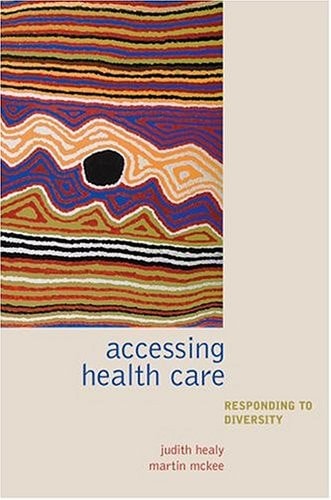
Accessing Health Care: Responding to Diversity
0
0
As an Amazon Associate and affiliate partner, Menrva Books earns from qualifying purchases. Learn more
Author Description
Health care systems in developed countries must respond to increasingly diverse populations given greater population movements in our globalised world. We all share a common humanity yet we each have different health care needs, depending on whether we are young or old, men or women, rich or poor, disabled or able-bodied, from different ethnic and indigenous groups, or citizens or asylum-seekers. Our membership of these societal groups shapes to some extent our health needs and our use of health services. But policy -makers and professionals often seem blind to this diversity. Some groups make special claims upon the state and have different expectation regarding health care. What are the barriers to people receiving equitable health care? Should mainstream services be made more responsive to the needs of different people, or is it necessary to set up alternative health care services? The chapters in this book discuss countries and population groups that illustrate different responses to claimant groups and different ways of delivering health services.For the first time this book brings together examples of how to deal with diversity from health systems across the industrialized world. It considers population groups within countries and takes a broad approach in studying inherent population diversity (age, sex) citizen issues (migrants, asylum seekers) and ethnic and indigenous groups (multiculturalism in the UK, Roma in Europe, New Zealand Maori, Australian Aborigines). It identifies barriers to accessing health care services by diverse populations and cultural groups within different countries and considers the advantages and disadvantages of different delivery models for different population groups.The book provides an unparalleled breadth of perspectives from which to draw conclusions about how to meet the needs of societies characterised by diversity.
Menrva's Summary
THE THESIS
How can health care systems in industrialized nations effectively address the diverse needs of increasingly heterogeneous populations while ensuring equitable access? Judith Healy and Martin McKee, both established experts in health policy and systems research, examine the systemic failures of current models to accommodate varied demographic groups. The authors argue that policy-makers often overlook the specific requirements of marginalized or distinct populations, and they present a comparative framework to evaluate whether mainstream services should be adapted or if specialized, alternative delivery models are required.
THE SCOPE MAP
What You Will Find
- Comparative analysis of health system responses to diversity across multiple industrialized nations.
- Examination of barriers to access for migrants, asylum seekers, indigenous groups, and ethnic minorities.
- Evaluation of the efficacy of mainstream versus specialized health service delivery models.
- Discussion of inherent population diversity factors including age, gender, and socioeconomic status.
THE AUTHORITY PERSPECTIVE
Experts identify this work as a foundational comparative study for health policy students and practitioners navigating the complexities of multicultural health care. Readers frequently note the book's comprehensive scope in addressing both structural and cultural barriers within modern medical systems.
Page Count:
400
Publication Date:
2004-02-19
Publisher:
Oxford University Press
ISBN-10:
0198516185
ISBN-13:
9780198516187
Public Policy
Sociology
Social justice
Medicine
Ethnic Groups
Health Care
Community Tags
Similar Books