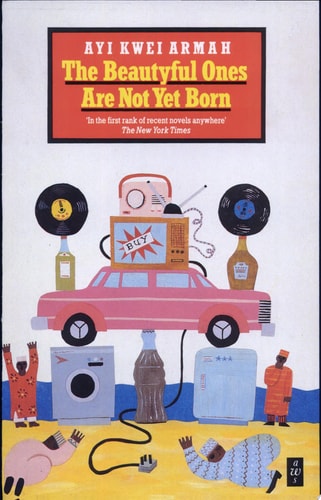
The Beautyful Ones Are Not Yet Born
0
0
As an Amazon Associate and affiliate partner, Menrva Books earns from qualifying purchases. Learn more
Author Description
A railway freight clerk in Ghana attempts to hold out against the pressures that impel him toward corruption in both his family and his country.
Menrva's Summary
THE PULSE
A railway freight clerk struggles to maintain his personal integrity amidst the pervasive corruption and moral decay of post-independence Ghana.
The protagonist, known only as 'the man,' navigates a society where bribery and material greed are the primary mechanisms for survival. He faces constant pressure from his family, who view his refusal to engage in graft as a failure to provide, and from colleagues who operate within a system of systemic exploitation. The narrative framework utilizes a grim, visceral realism to depict the physical filth of the urban environment as a mirror for the political disillusionment of the era. The man must reconcile his internal moral compass with the crushing weight of a nation failing to meet the promises of its liberation.
INSIDE THE PAGES
- Use of scatological imagery to represent societal decay
- Third-person limited perspective focusing on the protagonist's internal monologue
- Symbolism of the railway as a stagnant, repetitive system
- Exploration of the 'new elite' versus the impoverished working class
- Contrast between traditional values and modern materialist pressures
- Vivid descriptions of urban degradation and physical filth
- Non-linear reflections on the history of Ghanaian independence
- Focus on the psychological toll of ethical isolation
THE COLLECTIVE ECHO
Readers and critics frequently identify this work as a seminal text in postcolonial literature due to its uncompromising portrayal of disillusionment. Discussion often centers on the author's use of visceral, often repulsive imagery to critique the moral rot of the political class. Many highlight the protagonist's struggle as a universal examination of the difficulty of remaining honest in a corrupt environment. The pacing is often described as slow and meditative, emphasizing the suffocating atmosphere of the setting over traditional plot progression. Scholars frequently note that the book serves as a stark counter-narrative to the optimism surrounding African independence movements.
Page Count:
0
Publication Date:
1969-01-01
Publisher:
Macmillan Pub Co
ISBN-10:
0020482507
ISBN-13:
9780020482505
Postcolonial
Fiction
Political fiction
Social Commentary
African
Men
Ghana