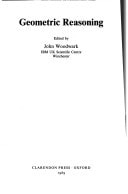
Geometric Reasoning
0
0
As an Amazon Associate and affiliate partner, Menrva Books earns from qualifying purchases. Learn more
Author Description
When computers are asked to deal with information about the shape of objects, the tasks required can be divided into those that can be attacked by algorithms and those that cannot. In computer graphics and image-processing, for example, despite great progress, it is really only the algorithmic processes that have been computerized. There are many more complex, less easily defined uses for shape information that elude solution. Geometric Reasoning deals with these activities. Its scope is broad, ranging beyond computational geometry or von Neumann architectures. Applications include shape modelling, computer graphics, image processing and computer vision.
Menrva's Summary
THE THESIS
This book investigates the fundamental divide between algorithmic computational geometry and the complex, non-algorithmic tasks required for advanced shape reasoning in computer systems. John Woodwark, an expert in computer-aided design and geometric modeling, examines the limitations of current von Neumann architectures when applied to the nuanced interpretation of object shapes. He argues that while standard algorithms handle basic graphics, a broader framework is required to address the more sophisticated, less easily defined problems in spatial data processing.
THE SCOPE MAP
What You Will Find
- Analysis of the limitations of current algorithmic processes in computer graphics.
- Exploration of non-algorithmic approaches to shape modeling and spatial reasoning.
- Discussion of applications in computer vision and image processing.
- Theoretical frameworks for moving beyond traditional computational geometry.
THE AUTHORITY PERSPECTIVE
Experts recognize this work as a foundational text for understanding the conceptual boundaries of geometric computation. Readers frequently note the technical density of the prose, which serves as a critical reference for researchers in computer-aided design and spatial analysis.
Page Count:
304
Publication Date:
1990-02-22
Publisher:
Oxford University Press
ISBN-10:
0198537387
ISBN-13:
9780198537380
Computer Science
Geometry
Mathematics
Computer graphics
Computer Vision
Algorithms
Community Tags
Similar Books