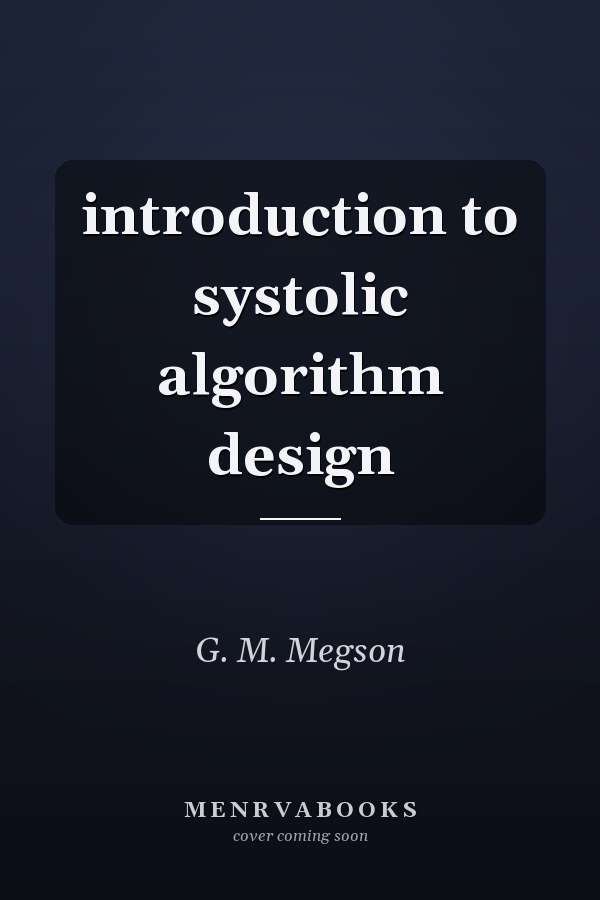
An Introduction to Systolic Algorithm Design
0
0
As an Amazon Associate and affiliate partner, Menrva Books earns from qualifying purchases. Learn more
Author Description
Parallel programming and the effective exploitation of parallel computers will play an increasingly important part in the future development of computer systems. Systolic processing is a technique for solving problems on a massively parallel computer architecture in a way that pumps information or data between processing elements in a regular and rhythmic pattern. This book is an introduction to the basic principles of systolic design, explaining what systolic algorithms are and showing how to design systolic arrays in a systematic way so that they meet certain design objectives such as area and time efficiency. These topics are addressed by underlining the distinction between the two concepts, with systolic algorithms being constrained by basic "axioms" of systolic design while systolic arrays are seen as dependent on "heuristics" defining the limitations of manufacturing technology. The text is based on the author's extensive experience with the design of systolic algorithms and his familiarity with teaching the subject to those with little or no background in parallel processing. It is intended for graduate students and professionals in the fields of computer science and engineering.
Menrva's Summary
THE THESIS
This book investigates the fundamental principles and systematic methodologies required to design efficient systolic algorithms and arrays for massively parallel computer architectures. The author, G. M. Megson, draws upon his extensive research and pedagogical experience to bridge the gap between theoretical algorithm design and the practical constraints of manufacturing technology. By establishing a clear distinction between algorithmic axioms and hardware heuristics, the text provides a structured framework for optimizing area and time efficiency in parallel processing systems.
THE SCOPE MAP
What You Will Find
- Principles of systolic processing and rhythmic data flow between processing elements
- Systematic design methodologies for systolic arrays
- Analysis of design objectives including area and time efficiency
- Theoretical distinctions between systolic algorithms and hardware-dependent systolic arrays
THE AUTHORITY PERSPECTIVE
Experts recognize this work as a foundational text for graduate students and professionals entering the field of parallel processing. Readers frequently note the technical clarity of the prose, which effectively introduces complex architectural concepts to those with limited prior background in the subject.
Page Count:
360
Publication Date:
1992-12-31
Publisher:
Oxford University Press
ISBN-10:
0198538138
ISBN-13:
9780198538134
Algorithms
Computer Algorithms
Computer Science
Computer Architecture
Engineering
Community Tags
Similar Books