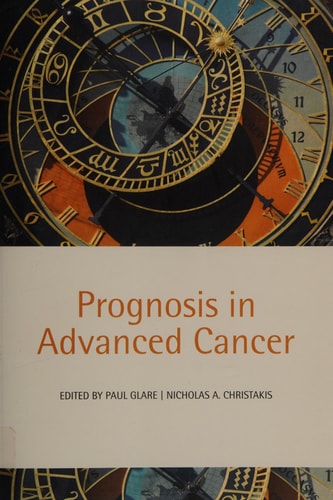
Prognosis in Advanced Cancer
0
0
As an Amazon Associate and affiliate partner, Menrva Books earns from qualifying purchases. Learn more
Author Description
Predicting survival and other outcomes is increasingly being recognized as an important skill for palliative care doctors and nurses, oncologists, and other healthcare professionals who treat patients with advanced cancer. Accurate prognosis is essential if we are to offer quality of care and 'a good death', as well as to aid decision-making. There is much prognostic information available that is scattered throughout the palliative care and oncological literature but this is the first time it has been gathered systematically in one place.Glare and Christakis, leaders in the field of prognosis, bring together a team of international contributors from across the fields of palliative care and oncology. This comprehensive but practical guide begins with the principles of prognostication, including formulating the prediction and then communicating it. Topics such as statistical issues, evidence-based medicine, and the ethics of prognostication are also covered. The second section addresses prognostication in 15 specific cancer sites once they have reached the advanced stage, following a standard template for consistency and easy access to the key information. The third section deals with prognostication in patients with a variety of common clinical conditions at the end of life, such as bowel obstruction, hypercalcaemia, and brain metastases. In addition, survival curves are provided within each chapter, palliative care conditions are examined for the first time, and a summary table of long and short term prognosis ensures this book remains practical.
Menrva's Summary
THE THESIS
This book investigates the clinical necessity and methodology of accurate prognostic assessment for patients suffering from advanced cancer. Authors Paul A. Glare and Nicholas A. Christakis, both recognized experts in palliative care and oncology, synthesize scattered research into a cohesive framework. The text provides healthcare professionals with the tools to formulate, communicate, and apply prognostic data to improve patient care and end-of-life decision-making.
THE SCOPE MAP
What You Will Find
- Principles of clinical prognostication and communication strategies
- Statistical analysis and evidence-based medicine applications in oncology
- Standardized prognostic templates for 15 specific advanced cancer sites
- Clinical guidance for end-of-life conditions including bowel obstruction and brain metastases
- Practical survival curves and summary tables for long and short term outcomes
THE AUTHORITY PERSPECTIVE
Experts identify this work as a foundational resource for oncologists and palliative care practitioners seeking to standardize prognostic accuracy. Readers frequently note the practical utility of the structured templates and the inclusion of specific clinical conditions often overlooked in broader literature.
Page Count:
432
Publication Date:
2008-06-02
Publisher:
Oxford University Press
ISBN-10:
0198530226
ISBN-13:
9780198530220
Health
Reference
Medical
Oncology
Prognosis
Community Tags
Similar Books