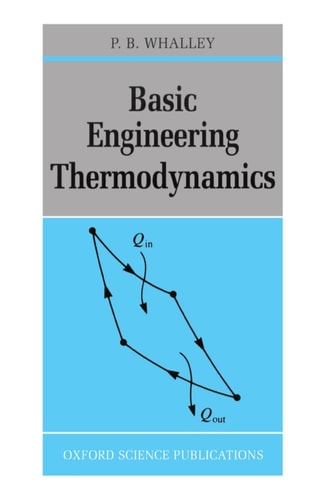
Basic Engineering Thermodynamics
0
0
As an Amazon Associate and affiliate partner, Menrva Books earns from qualifying purchases. Learn more
Author Description
This introduction to thermodynamics for engineering students assumes no previous instruction in the subject. The book covers the first and second laws of thermodynamics with a special emphasis on their implications for engineers. Each topic is illustrated with worked examples and is presented in a logical order, allowing the student to tackle increasingly complex problems. Problems and selected answers are included. The heart of engineering thermodynamics is the conversion of heat into work. Increasing demands for more efficient conversion, for example to reduce carbon dioxide emissions, are leading to the adoption of new thermodynamic cycles. However the principles of these new cycles are very simple and are subject to the standard laws of thermodynamics as explained in this book.
Menrva's Summary
THE THESIS
This text investigates the fundamental principles of thermodynamics and their practical application in engineering systems. P. B. Whalley provides a structured introduction designed for students with no prior exposure to the subject. The book utilizes the first and second laws of thermodynamics as a framework to explain energy conversion processes, emphasizing the conversion of heat into work within modern engineering contexts.
THE SCOPE MAP
What You Will Find
- Comprehensive coverage of the first and second laws of thermodynamics
- Analysis of thermodynamic cycles and their efficiency
- Practical worked examples for complex problem solving
- End-of-chapter problems with selected answers
THE AUTHORITY PERSPECTIVE
Experts and educators frequently cite this text as a foundational resource for undergraduate engineering students due to its logical progression and clarity. Readers often note that the prose remains accessible while maintaining the necessary technical rigor for introductory coursework.
Page Count:
240
Publication Date:
1993-01-07
Publisher:
Oxford University Press
ISBN-10:
0198562551
ISBN-13:
9780198562559
Engineering
Thermodynamics
Physics
textbook
Community Tags
Similar Books