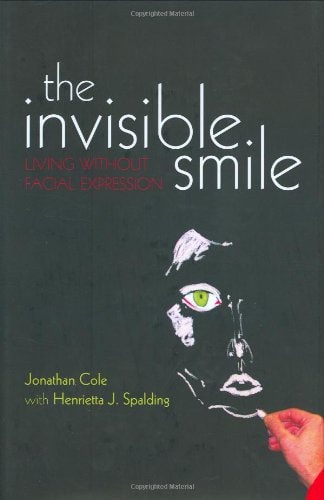
The Invisible Smile: Living Without Facial Expression
0
0
As an Amazon Associate and affiliate partner, Menrva Books earns from qualifying purchases. Learn more
Author Description
We are defined by our faces. They give identity, but, equally important, reveal our moods and emotions through facial expression. So what happens when the face cannot move? This book is about people who live with Möbius Syndrome, which has as its main feature an absence of movement of the muscles of facial expression from birth.People with Möbius cannot smile, frown, or look surprised or sad. Talking and eating are problematic, since their lips do not move. Even looking around is also difficult since the eyes cannot move either. The book is unique in giving those with Möbius a voice, allowing children and adults with the condition to explain what it is like. These fascinating biographies reveal much about the relation between face and facial expression, and emotional expression and emotional experience which we normally take for granted. The narratives also show the creative ways in which those with Möbius construct their lives and how they come to terms with and express their identities with, and yet, beyond their faces. Some with Möbius have been thought to have learning difficulties and autism, since an impassive immobile face has been assumed to reflect inner cognitive problems. This book criticizes such work and asks people to look not only at the face but beyond it to see the person.Throughout the book, several themes emerge, of which perhaps the most surprising is the reduced emotional experience those with Möbius can have as children and young adults and the journeys they go on as they realize this and then assimilate emotion from the outside in.The result of a 4 year collaboration between a clinician/neuroscientist and a teacher/lobbyist who lives with Möbius, The Invisible Smile provides an authentic, personal and moving account of this disorder.
Menrva's Summary
THE THESIS
This book investigates the lived experience of individuals with Möbius Syndrome, a rare congenital condition characterized by the inability to move facial muscles. The authors, a clinician-neuroscientist and a lobbyist living with the condition, argue that the societal assumption equating facial immobility with cognitive or emotional deficit is fundamentally flawed. By synthesizing personal narratives with clinical observation, they challenge the reader to look beyond the physical surface to understand the complex emotional development and identity formation of those affected.
THE SCOPE MAP
What You Will Find
- Detailed biographical accounts from children and adults living with Möbius Syndrome.
- Analysis of the relationship between facial expression and the internal experience of emotion.
- Critical examination of medical and psychological misconceptions regarding cognitive ability and autism in patients with facial paralysis.
- Exploration of the adaptive strategies used by individuals to communicate and establish identity without traditional facial cues.
THE AUTHORITY PERSPECTIVE
Experts and readers alike recognize this work as a significant contribution to the literature on rare neurological conditions, specifically for its success in centering the voices of those with the syndrome. The text is noted for its accessible blend of clinical insight and personal narrative, making it a valuable resource for both medical professionals and the general public.
Page Count:
256
Publication Date:
2009-01-15
Publisher:
Oxford University Press
ISBN-10:
0198566395
ISBN-13:
9780198566397
Psychology
Biography
Sociology
Medicine
Neuroscience
Paralysis
Community Tags
Similar Books