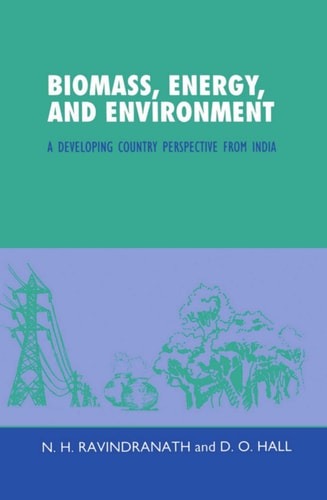
Biomass, Energy, and Environment: A Developing Country Perspective from India
Author Description
Developing countries are searching for alternate energy options which promote sustainable development and equity. Modernized bioenergy is shown as an option with potential to meet the rural needs of a large populous country like India, along with significant social, environmental, and economic benefits such as carbon-emission reduction and the promotion of biodiversity. This text uses India as a case study for biomass, energy and environment, which postgraduates and professionals in environmental sciences and energy development planning can use as a model for analyzing the potential for biomass energy for other developing countries.
Menrva's Summary
THE THESIS
This book investigates whether modernized bioenergy can serve as a viable, sustainable, and equitable energy solution for developing nations. The authors, D. O. Hall and N. H. Ravindranath, utilize India as a comprehensive case study to evaluate the intersection of rural energy demands, carbon emission reduction, and biodiversity preservation. By analyzing the socio-economic and environmental impacts of biomass, the text provides a structured framework for energy planners and scientists to assess similar potential in other developing regions.
THE SCOPE MAP
What You Will Find
- Analysis of biomass energy potential within the context of rural Indian development.
- Evaluation of social, environmental, and economic benefits of bioenergy modernization.
- Case study methodology for assessing sustainable energy alternatives in developing countries.
- Data regarding carbon emission reduction and biodiversity promotion through bioenergy.
THE AUTHORITY PERSPECTIVE
Experts and professionals in environmental science recognize this work as a foundational case study for energy planning in developing economies. Readers frequently note the technical focus on policy and sustainability metrics, making it a standard reference for those involved in international development and energy research.
Page Count:
392
Publication Date:
1995-10-19
Publisher:
Oxford University Press
ISBN-10:
0198564368
ISBN-13:
9780198564362
India
Biomass Energy
Sustainability
Energy
Community Tags
Similar Books