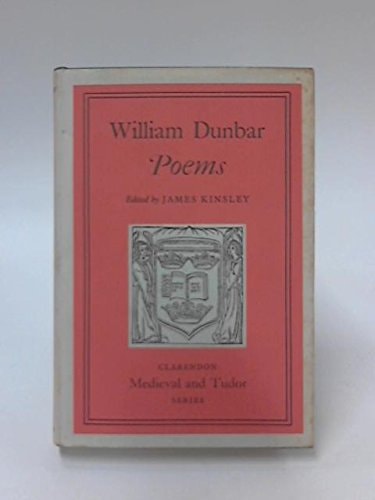
William Dunbar: Poems
0
0
As an Amazon Associate and affiliate partner, Menrva Books earns from qualifying purchases. Learn more
Author Description
This book was originally published prior to 1923, and represents a reproduction of an important historical work, maintaining the same format as the original work. While some publishers have opted to apply OCR (optical character recognition) technology to the process, we believe this leads to sub-optimal results (frequent typographical errors, strange characters and confusing formatting) and does not adequately preserve the historical character of the original artifact. We believe this work is culturally important in its original archival form. While we strive to adequately clean and digitally enhance the original work, there are occasionally instances where imperfections such as blurred or missing pages, poor pictures or errant marks may have been introduced due to either the quality of the original work or the scanning process itself. Despite these occasional imperfections, we have brought it back into print as part of our ongoing global book preservation commitment, providing customers with access to the best possible historical reprints. We appreciate your understanding of these occasional imperfections, and sincerely hope you enjoy seeing the book in a format as close as possible to that intended by the original publisher.
Menrva's Summary
THE PULSE
The poems of William Dunbar capture the complex social and political landscape of the late medieval Scottish court through sharp wit and formal mastery. Dunbar navigates the rigid hierarchies of the royal household, employing a variety of poetic forms to critique corruption, celebrate courtly life, and reflect on the transience of human existence. His work often utilizes a sophisticated, highly stylized vocabulary that bridges the gap between Middle Scots tradition and early Renaissance sensibilities. The collection serves as a primary record of the intellectual and artistic climate of the early sixteenth-century Scottish monarchy.
INSIDE THE PAGES
- Utilization of the aureate style characterized by Latinate vocabulary
- Frequent use of the dream vision narrative framework
- Incorporation of satirical commentary on courtly figures and clergy
- Mastery of the rhyme royal and other complex stanzaic structures
- Exploration of memento mori themes and the inevitability of death
- Vivid depictions of the Scottish landscape and urban life
- Integration of religious devotion alongside bawdy, humorous verse
- Linguistic preservation of Middle Scots dialect and orthography
THE COLLECTIVE ECHO
Readers and scholars frequently highlight Dunbar as one of the most technically proficient poets of the late medieval period. Discussion often centers on his ability to shift seamlessly between high-minded moral allegory and biting, irreverent satire. Critics note that his work provides an essential window into the cultural tensions of the Scottish court during the transition to the Tudor era. The collection is widely regarded as a foundational text for those studying the evolution of the English language and the specific literary traditions of Scotland.
Page Count:
188
Publication Date:
1958-01-01
Publisher:
Oxford University Press
ISBN-10:
0198710011
ISBN-13:
9780198710011
Classics
Poetry
Tudor
Medieval
Literature
Community Tags
Similar Books