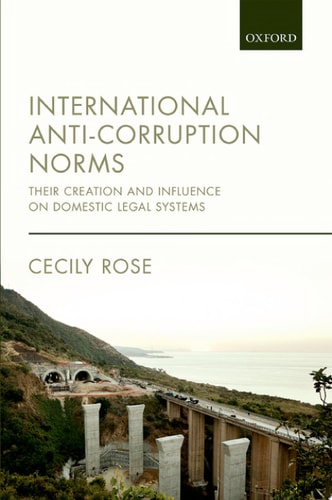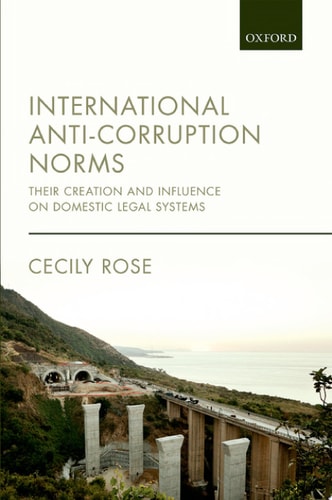
International Anti-Corruption Norms: Their Creation and Influence on Domestic Legal Systems
0
0
As an Amazon Associate and affiliate partner, Menrva Books earns from qualifying purchases. Learn more
Author Description
The creation of international anti-corruption norms through non-binding instruments and informal institutions can privilege the interests of powerful states and raise questions about the legitimacy of these institutions and the instruments they produce. At the same time, the anti-corruption instruments created under the auspices of these institutions also show that non-binding instruments and informal institutions carry significant advantages. The non-binding instruments in the anti-corruption field have a clear capacity to influence domestic legal systems that is comparable to, if not greater than, that of binding treaties.This book examines the creation of international anti-corruption norms by states and other actors through four markedly different institutions: the Organisation for Economic Co-operation and Development, the United Nations, the Extractive Industries Transparency Initiative, and the Financial Action Task Force. Each of these institutions oversees an international instrument that requires states to combat corruption - yet only the United Nations oversees anti-corruption norms that take the sole form of a binding multilateral treaty. The OECD has, by contrast, fostered the development of the binding 1997 OECD Anti-Bribery Convention, as well as non-binding recommendations and guidance associated with treaty itself. In addition, the revenue transparency and anti-money laundering norms developed through the Extractive Industries Transparency Initiative and the Financial Action Task Force, respectively, take the form of the non-binding instruments that have no relationship with multilateral treaties.With corruption at the forefront of political debate, International Anti-Corruption Norms provides timely guidance on the burgeoning debate surrounding international finance and natural resources extraction, as well as other forms of modern-day corruption, and the most effective methods of tackling these global political issues.
Menrva's Summary
THE THESIS
This book investigates how international anti-corruption norms, created through both binding treaties and non-binding instruments, influence domestic legal systems and shape global governance. Cecily Rose, a scholar in international law, evaluates the legitimacy and efficacy of various institutions in establishing these standards. By comparing formal treaty-based approaches with informal institutional frameworks, the author argues that non-binding instruments often exert a level of influence on national law that rivals or exceeds that of traditional multilateral treaties.
THE SCOPE MAP
What You Will Find
- Comparative analysis of four distinct institutions: the OECD, the United Nations, the Extractive Industries Transparency Initiative, and the Financial Action Task Force.
- Examination of the tension between powerful state interests and the legitimacy of informal international governance.
- Assessment of how revenue transparency and anti-money laundering norms are integrated into domestic legal frameworks.
- Evaluation of the effectiveness of non-binding instruments versus binding multilateral treaties in combating global corruption.
THE AUTHORITY PERSPECTIVE
Legal scholars and policy experts recognize this work as a rigorous examination of the mechanisms behind international norm-setting in the anti-corruption field. Readers frequently note the academic density of the prose, which provides a comprehensive resource for those studying the intersection of international finance, natural resource extraction, and global legal reform.
Page Count:
288
Publication Date:
2015-10-09
Publisher:
Oxford University Press
ISBN-10:
0198737211
ISBN-13:
9780198737216
Public Policy
International relations
Professional Career & Trade
Criminal Law
Law
Corruption
Community Tags
Similar Books