The Man of Numbers
0
0
As an Amazon Associate and affiliate partner, Menrva Books earns from qualifying purchases. Learn more
Author Description
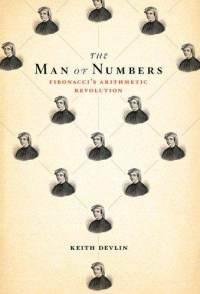
From NPR's Math Guy, the story of Leonardo of Pisa, the medieval mathematician who introduced Arabic numbers to the West and helped launch the modern era. In 1202, a young Italian published one of the most influential books of all time, introducing modern arithmetic to Western Europe. Leonardo of Pisa (better known today as Fibonacci) had learned the Hindu-Arabic number system when as a teenager he traveled with his father, a customs official for Pisa, to North Africa, then one of the principal mercantile centers of Europe. Devised in India in the seventh and eighth centuries and brought to North Africa by Muslim traders, the Hindu-Arabic system (featuring the numerals 0 through 9) offered a much simpler method of calculation than the then-popular finger reckoning and cumbersome Roman numerals. Though written in scholarly Latin, Fibonacci's book Liber Abbaci (The Book of Calculation) was the first to recognize the power of the 10 numerals, and to aim them at the world of commerce. It spawned generations of popular math texts in colloquial Italian and other languages that made it possible for ordinary people to buy and sell goods, convert currencies, and keep accurate records more readily than ever before—helping transform the West into the dominant force in science, technology, and large-scale international commerce. Liber Abbaci and Fibonacci's other books made him the greatest mathematician of the Middle Ages. Yet despite the ubiquity of his discoveries, Leonardo of Pisa has largely slipped from the pages of history. He is best known today for discovering the "Fibonacci sequence" of numbers that appears with great regularity in biological structures throughout nature, and is used by some to predict the rise and fall of financial markets. Keith Devlin re-creates the life and enduring legacy of an overlooked genius, and in the process makes clear how central numbers and mathematics are to our daily lives. - Publisher.
Menrva's Summary
THE THESIS
The Man of Numbers explores the profound impact of Leonardo of Pisa, also known as Fibonacci, on Western civilization through his introduction of the Hindu-Arabic numeral system. This book details how Fibonacci's seminal work, Liber Abbaci, published in 1202, provided a revolutionary and simpler method for calculation compared to the prevailing Roman numerals and finger reckoning. It argues that this adoption of a more efficient numerical system was instrumental in transforming commerce, science, and international trade, laying the groundwork for the modern era.
THE SCOPE MAP
- The life and travels of Leonardo of Pisa (Fibonacci) and his exposure to the Hindu-Arabic numeral system in North Africa.
- An analysis of Fibonacci's book, Liber Abbaci, and its significance in introducing the numerals 0-9 to Western Europe.
- The historical context of mathematics and commerce in the Middle Ages, contrasting Hindu-Arabic numerals with Roman numerals and finger reckoning.
- The impact of Liber Abbaci on subsequent mathematical texts and the broader adoption of modern arithmetic in Europe.
- Fibonacci's lesser-known contributions beyond the famous Fibonacci sequence, and his legacy as the greatest mathematician of the Middle Ages.
- An examination of how numbers and mathematics are integral to daily life, as demonstrated through historical examples.
THE AUTHORITY PERSPECTIVE
This book is recognized for its comprehensive re-creation of the life and enduring legacy of Leonardo of Pisa, an often overlooked historical figure. It effectively demonstrates the central role of mathematics and numbers in shaping the modern world, drawing on historical texts and context to support its arguments. The work is noted for making complex historical and mathematical concepts accessible to a general audience.
Page Count:
183
Publication Date:
2011-01-01
ISBN-10:
0802778127
ISBN-13:
9780802778123
Nature
Non-Fiction
History
Biography
Mathematics
Community Tags
Similar Books