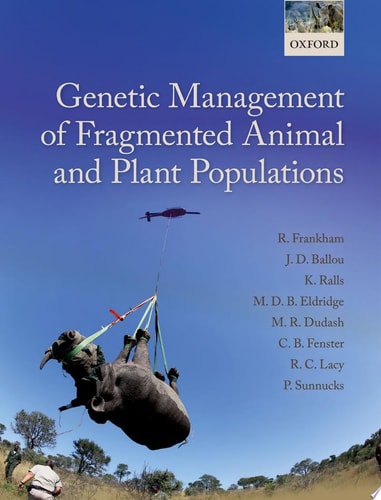
Genetic Management of Fragmented Animal and Plant Populations
0
0
As an Amazon Associate and affiliate partner, Menrva Books earns from qualifying purchases. Learn more
Author Description
One of the greatest unmet challenges in conservation biology is the genetic management of fragmented populations of threatened animal and plant species. More than a million small, isolated, population fragments of threatened species are likely suffering inbreeding depression and loss of evolutionary potential, resulting in elevated extinction risks. Although these effects can often be reversed by re-establishing gene flow between population fragments, managers very rarely do this. On the contrary, genetic methods are used mainly to document genetic differentiation among populations, with most studies concluding that genetically differentiated populations should be managed separately, thereby isolating them yet further and dooming many to eventual extinction! Many small population fragments are going extinct principally for genetic reasons. Although the rapidly advancing field of molecular genetics is continually providing new tools to measure the extent of population fragmentation and its genetic consequences, adequate guidance on how to use these data for effective conservation is still lacking.This accessible, authoritative text is aimed at senior undergraduate and graduate students interested in conservation biology, conservation genetics, and wildlife management. It will also be of particular relevance to conservation practitioners and natural resource managers, as well as a broader academic audience of conservation biologists and evolutionary ecologists.
Menrva's Summary
THE THESIS
This book investigates how to effectively manage the genetic health of fragmented animal and plant populations to prevent extinction caused by inbreeding and loss of evolutionary potential. The authors, a team of distinguished conservation biologists and geneticists, argue that current management practices often exacerbate isolation by over-emphasizing genetic differentiation. They provide a framework for integrating molecular data into practical conservation strategies, shifting the focus from mere documentation to active genetic management and the restoration of gene flow.
THE SCOPE MAP
What You Will Find
- Analysis of inbreeding depression and loss of evolutionary potential in isolated population fragments.
- Methodologies for re-establishing gene flow between fragmented populations.
- Evaluation of molecular genetic tools used to measure population fragmentation.
- Practical guidance for conservation practitioners and natural resource managers on applying genetic data to wildlife management.
THE AUTHORITY PERSPECTIVE
Experts identify this work as a critical resource for bridging the gap between theoretical conservation genetics and field-based management practices. Readers frequently note the clarity of the prose, which makes complex genetic concepts accessible to both advanced students and professional practitioners in the field.
Page Count:
432
Publication Date:
2017-09-13
Publisher:
Oxford University Press
ISBN-10:
0198783396
ISBN-13:
9780198783398
Science
Biology
Conservation
Landscapes
Biodiversity
Genetics
Ecology
Zoology
Community Tags
Similar Books
Reader Comments
Share Your Thoughts
No comments yet. Be the first to share your thoughts!