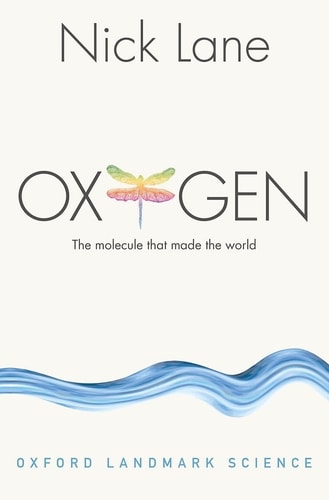
Oxygen
0
0
As an Amazon Associate and affiliate partner, Menrva Books earns from qualifying purchases. Learn more
Author Description
Oxygen has had extraordinary effects on life.Three hundred million years ago, in Carboniferous times, dragonflies grew as big as seagulls, with wingspans ofnearly a metre. Researchers claim they could have flown only if the air had contained more oxygen than today -probably as much as 35 per cent. Giant spiders, tree-ferns, marine rock formations and fossil charcoalsall tell the same story. High oxygen levels may also explain the global firestorm that contributed to thedemise of the dinosaurs after the asteroid impact.The strange and profound effects that oxygen has had on the evolution of life pose a riddle, which this booksets out to answer. Oxygen is a toxic gas. Divers breathing pure oxygen at depth suffer from convulsionsand lung injury. Fruit flies raised at twice normal atmospheric levels of oxygen live half as long as theirsiblings. Reactive forms of oxygen, known as free radicals, are thought to cause ageing in people. Yet ifatmospheric oxygen reached 35 per cent in the Carboniferous, why did it promote exuberant growth,instead of rapid ageing and death?Oxygen takes the reader on an enthralling journey, as gripping as a thriller, as it unravels the unexpectedways in which oxygen spurred the evolution of life and death. The book explains far more than the size ofancient insects: it shows how oxygen underpins the origin of biological complexity, the birth of photosynthesis, the sudden evolution of animals, the need for two sexes, the accelerated ageing of cloned animals like Dolly the sheep, and the surprisingly long lives of bats and birds.Drawing on this grand evolutionary canvas, Oxygen offers fresh perspectives on our own lives and deaths,explaining modern killer diseases, why we age, and what we can do about it. Advancing revelatory new ideas,following chains of evidence, the book ranges through many disciplines, from environmental sciences tomolecular medicine. The result is a captivating vision of contemporary science and a humane synthesis of ourplace
Menrva's Summary
THE THESIS
This book investigates the paradoxical role of oxygen as both the essential fuel for complex life and a primary driver of biological toxicity and aging. Nick Lane, a biochemist and writer, synthesizes evidence from geology, evolutionary biology, and molecular medicine to explain how atmospheric oxygen levels have shaped the trajectory of life on Earth. He argues that the same reactive properties that allow for high-energy metabolism also dictate the limits of longevity and the mechanisms of disease in modern organisms.
THE SCOPE MAP
What You Will Find
- Analysis of atmospheric oxygen fluctuations throughout geological history, including the Carboniferous period.
- Examination of the biochemical mechanisms behind free radicals and oxidative stress.
- Discussion of the evolutionary origins of photosynthesis and biological complexity.
- Exploration of the link between metabolic rates, oxygen consumption, and the aging process in various species.
THE AUTHORITY PERSPECTIVE
Experts and readers alike recognize this work as a highly accessible yet rigorous synthesis of complex biochemical and evolutionary concepts. The text is frequently cited for its ability to bridge the gap between specialized scientific research and broader questions regarding human health and longevity.
Page Count:
384
Publication Date:
2016-01-01
Publisher:
Oxford University Press
ISBN-10:
0198784937
ISBN-13:
9780198784937
Science
Natural History
Evolution
Medicine
Biology
Oxygen
Community Tags
Similar Books